
Introduction
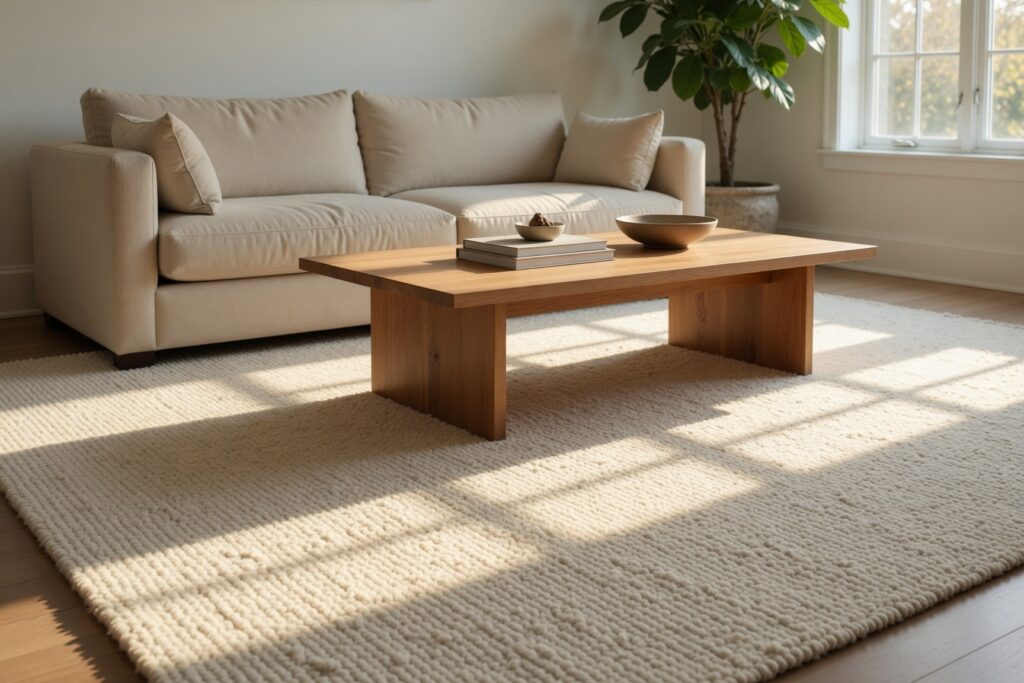
Living room rugs are more than décor. They help define your space, add comfort underfoot, and protect flooring from everyday wear. If you’ve ever felt like your living room looks “almost right,” the right rug is often the missing piece.
A well-chosen rug can also support practical needs like noise reduction and warmth—especially if you have tile, hardwood, or laminate floors. In this guide, you’ll learn how to pick the right size, understand rug materials, and place your rug the way designers do. You’ll also get cleaning tips and a simple checklist to help you avoid common mistakes.
Table of Contents
Why Living Room Rugs Are Essential
You might wonder if you really need one. While bare floors have a certain minimalist charm, they often lack warmth and acoustic comfort. Here is why adding soft flooring underfoot is essential:
The living room is where people gather, move around, and spend time. So it makes sense that living room rugs should work as both style and function.
- Visual Cohesion: They tie disparate furniture pieces together. Without one, a sofa and chairs often look like they are floating aimlessly.
- Warmth and Texture: Hard surfaces like tile or wood can feel cold and sterile. Textiles introduce softness and visual interest.
- Defining Zones: In open-concept homes, they act as invisible walls, creating distinct living areas without blocking light or sightlines.
- Floor Protection: High-traffic areas suffer from scratches and wear. A quality mat protects expensive flooring from damage.
Types of Living Room Rugs
Not all floor coverings are created equal. The shape and construction you choose depend entirely on your layout and furniture arrangement.
Area Rugs
These are the standard rectangular options used in most homes. They are versatile and available in every imaginable size.
Runner Rugs
Long and narrow, these are typically used in hallways but work beautifully alongside a sofa or a long kitchen island adjacent to the living space.
Round Rugs
Perfect for breaking up grid-like rooms. They soften the look of square coffee tables or create a distinct zone under small accent chairs.
Square and Oversized Options
Square shapes fit well in formal seating areas, while oversized ones (like 12′ x 18′) cover nearly the entire room, making a grand statement.
Layered Combinations
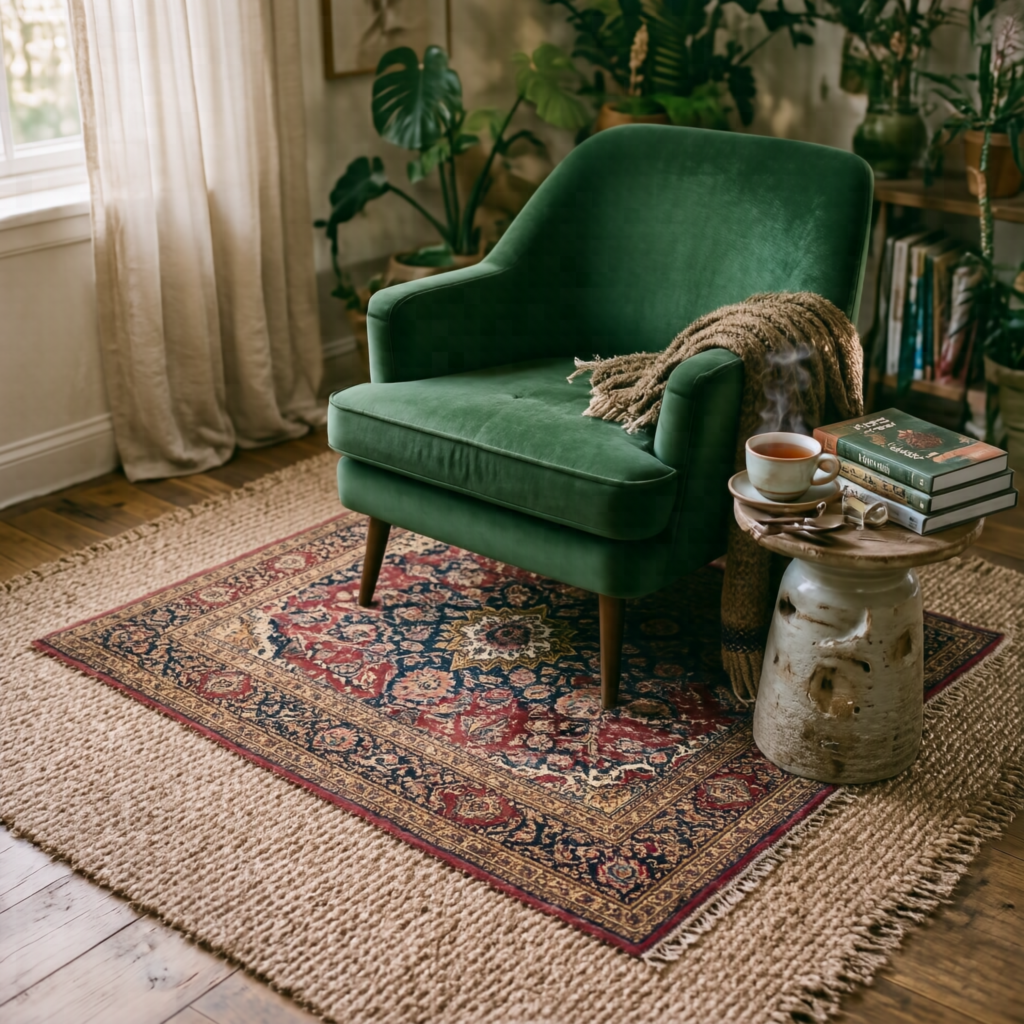
This trend involves placing a smaller patterned mat over a larger neutral one. It adds depth and is a favorite trick of interior designers.
Indoor-Outdoor Rugs
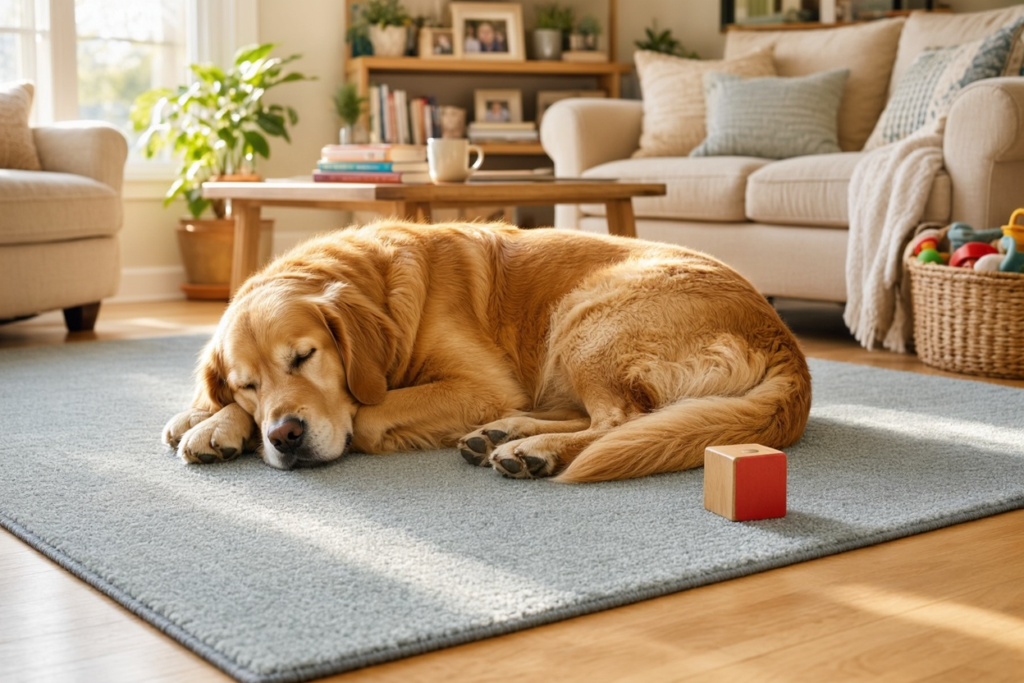
Made from tough synthetic fibers, these are increasingly popular inside because they handle spills, pets, and kids with ease.
Best Materials for Living Room Rugs
The material determines durability, texture, and price. Here is a breakdown of what works best.
| Material | Durability | Feel | Best For |
| Wool | Very High | Soft & Warm | Luxury living rooms, low-to-mid traffic |
| Cotton | Medium | Casual & Washable | Kids’ spaces, kitchens, casual decor |
| Jute/Natural Fiber | Medium | Rough Texture | Layering, rustic/boho styles |
| Polypropylene | High | Soft/Synthetic | High traffic, pets, damp areas |
| Viscose/Silk | Low | Silky & Shiny | Formal, low-traffic areas only |
Wool
Wool is the gold standard. It is naturally stain-resistant, durable, and incredibly soft. However, it requires more maintenance than synthetics.
Cotton
Affordable and machine washable, cotton offers a relaxed vibe. It’s great for layering but may not stand up to decades of heavy foot traffic.
Jute and Natural Fibers
These bring an organic, earthy look. Note that jute can be rough on bare skin and is prone to mold if soaked, so avoid placing it in super moist areas.
Polypropylene / Synthetic Blends
If you have pets or children, this is your best friend. Modern synthetics mimic wool’s softness but are virtually indestructible and easy to clean.
Viscose / Silk Blends
Use these sparingly. They offer a beautiful sheen but are delicate. Ideal for formal sitting areas that aren’t used daily.
Washable materials
If you’re comparing the best Living Room Rugs for busy households, washable options can be a practical win. Just be sure the backing is stable and the rug dries properly.
How to Choose the Right Size and Placement
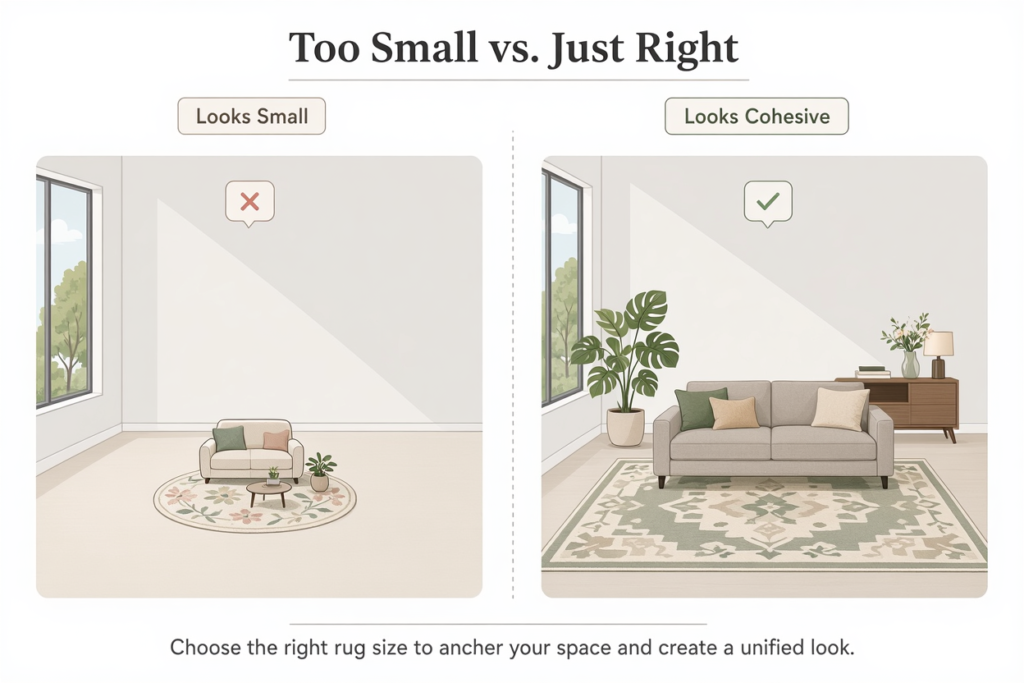
Getting the size wrong is the most common mistake homeowners make. A tiny floating island looks awkward; the right size grounds the room perfectly.
Small Rooms (5′ x 7′ to 6′ x 9′)
In smaller apartments or cozy nooks, use this size to center a loveseat or two armchairs. Ensure the front legs of the furniture sit comfortably on the edge.
Standard Spaces (8′ x 10′)
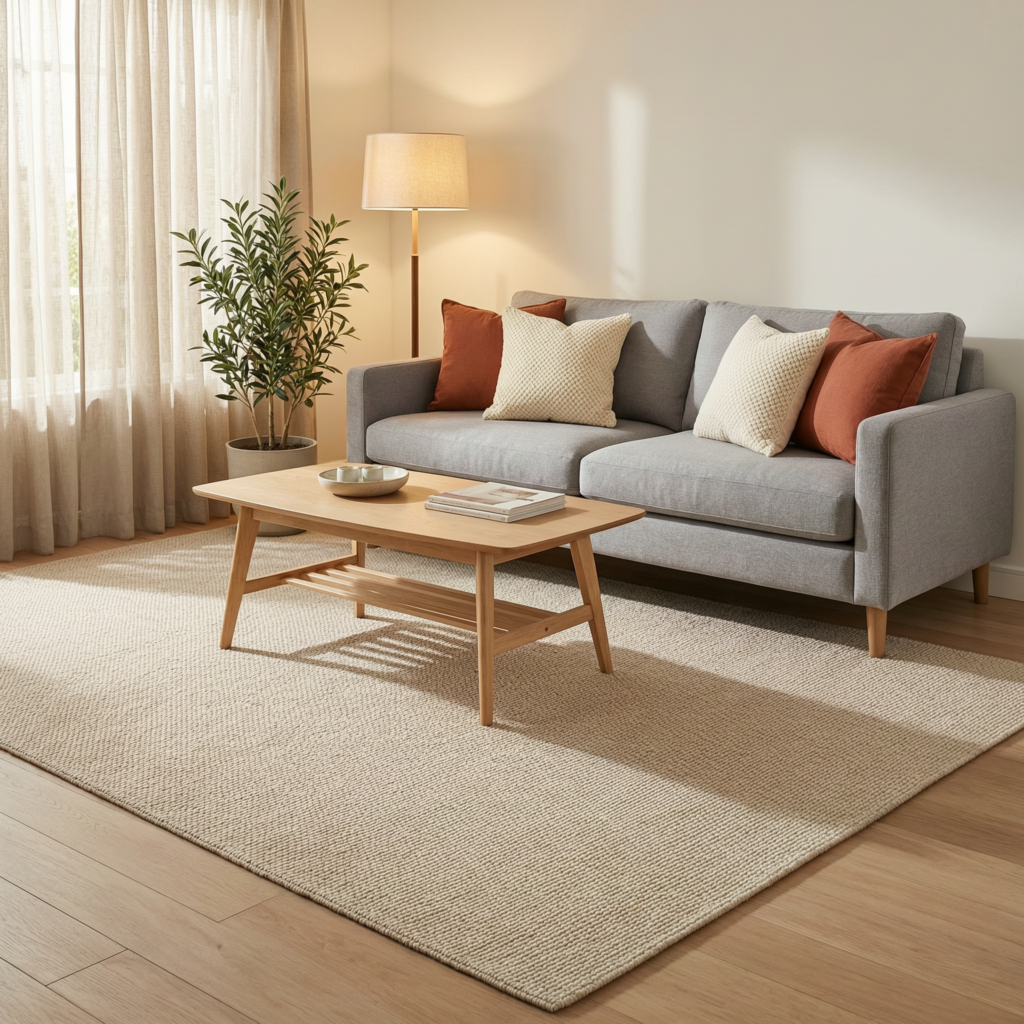
This is the most popular size for average living rooms. It fits under the front legs of a standard sofa and creates a clear border around a coffee table.
Large or Open Spaces (9′ x 12′ or larger)
For spacious rooms, go big. All furniture legs should ideally rest on the surface. This defines the conversation area distinctly from the dining or entry zones.
Placement Rules
- The “Front Legs On” Rule: For a casual look, just the front legs of your major furniture pieces touch the rug.
- The “All Legs On” Rule: For a formal look, all four legs of the sofa and chairs sit on top.
- Under Sectionals: If you have a sectional, aim for the rug to extend at least 12–24 inches beyond the open side of the sofa, or tuck the front legs underneath (without hiding them).
Style and Design Trends
Style is subjective, but current trends lean towards balance between minimalism and personality.
Neutral and Textured
Beige, ivory, and gray remain dominant. The key now is texture—shag, high-low pile, or carved patterns—to add interest without competing color.
Bold Patterns and Vintage-Inspired
Persian, Oushak, or distressed vintage prints are returning. They hide stains effectively while adding artistic flair to modern spaces.
Modern Minimalist
Clean lines, solid blocks of color, or geometric borders suit contemporary interiors best.
Bohemian and Global Prints
Rich colors and mixed patterns work well if the rest of your furniture is simple (think white walls and wood floors).
Sustainable Options
Rugs made from recycled plastic bottles or sustainably harvested fibers are growing rapidly. Look for certifications if eco-friendliness matters to you.
Living Room Rugs for High-Traffic and Family Homes
Real life is messy. If your living room sees constant action, functionality must come first.
Washable Choices:
Look explicitly for “machine washable” labels. These are often thin enough to throw into a large capacity washer but are highly effective for trapping dirt.
Stain Resistance:
Dark colors, busy patterns, and synthetic fibers are your allies here. Avoid solid white or high-pile shags in the path between the couch and the fridge.
Pile Height:
Low-pile (flatweave) options are easier to vacuum and harder for pets to snag with their claws.
Non-Slip Backing:
Safety first! Rubberized backings prevent sliding on hardwood, keeping toddlers and elders safe.
Budget Tips: Affordable vs. Investment
You don’t need to spend a fortune, but knowing when to save helps.
When to Save:
Buy affordable synthetics for rental apartments, dorms, or trendy patterned pieces you might tire of quickly.
When to Splurge:
Invest in high-quality wool or handmade pieces for forever homes where the rug serves as the main focal point of a formal living room.
Extending Life:
Rotate your rug 180 degrees every few months to ensure even sun fading and foot traffic wear. Use a pad underneath to reduce friction and impact.
Cleaning and Maintenance Guide
Maintenance keeps your purchase looking fresh.
- Vacuum Regularly: Once a week. Don’t use the beater bar on high-pile wool; stick to the suction setting to prevent fuzzing.
- Spot Clean: Address spills immediately. Blot (don’t rub) with a clean cloth and mild detergent solution.
- Deep Clean: Professional cleaning every 12–18 months for wool; hose down or steam clean synthetics annually.
- Rotation: Spin the mat seasonally to counteract uneven sunlight and wear patterns.
Common Mistakes to Avoid
Avoid these frequent errors to get the look you want:
- Choosing Too Small: A postage-stamp-sized rug makes the room shrink visually. Bigger is almost always better.
- Ignoring the Pad: Rug pads prevent slipping, add cushioning, and protect your floor from staining.
- Wrong Material Choice: Putting a delicate natural fiber in a damp, high-traffic entryway invites disaster.
- Blocking Doors: Ensure the edges do not cross door thresholds, creating tripping hazards or preventing doors from opening fully.
Quick Buying Checklist
Before you click “buy,” check these boxes:
- Measured the room accurately (at least twice!)
- Determined the desired placement (Front Legs Only vs All Legs On)
- Assessed household needs (pets/kids = durable/washable)
- Selected appropriate material (wool for luxury, polypropylene for practicality)
- Checked return policy
- Ordered the correct pad size
- Matched color scheme to existing palette
- Considered long-term maintenance
- Verified dimensions against the furniture footprint
- Reviewed shipping costs and logistics
FAQ About Living Room Rugs
Are washable options durable enough?
Yes, modern technology has advanced significantly. Many look identical to standard indoor versions but are reinforced to withstand machine washing cycles.
How do I stop my rug from sliding?
Purchase a high-quality non-slip pad designed for your specific floor type (hardwood grip pads differ from those meant for carpet).
How do I know what size to buy?
Measure your seating area. Ideally, you want at least the front legs of your sofa to rest on the rug, or measure 18–24 inches of exposed floor around the perimeter of your furniture group.
Can I put a rug over carpet?
Yes, this is called layering. To prevent bunching, use a rug-to-carat gripper pad and ensure the base carpet is low-pile so the top layer sits flat.
How often should I clean mine?
Vacuum weekly to remove grit (which cuts fibers). Deep clean spot treatments as needed, with a professional deep clean every 12–24 months depending on traffic.
Conclusion
Selecting the right living room rugs is one of the most impactful decisions you can make for your interior design. It protects your investment in flooring, dampens noise, and unifies your décor. By considering size, material, and your family’s lifestyle, you can find an option that balances beauty with practicality. Whether you prefer the plush luxury of wool or the toughness of synthetics, the perfect foundation for your home is waiting to be discovered.