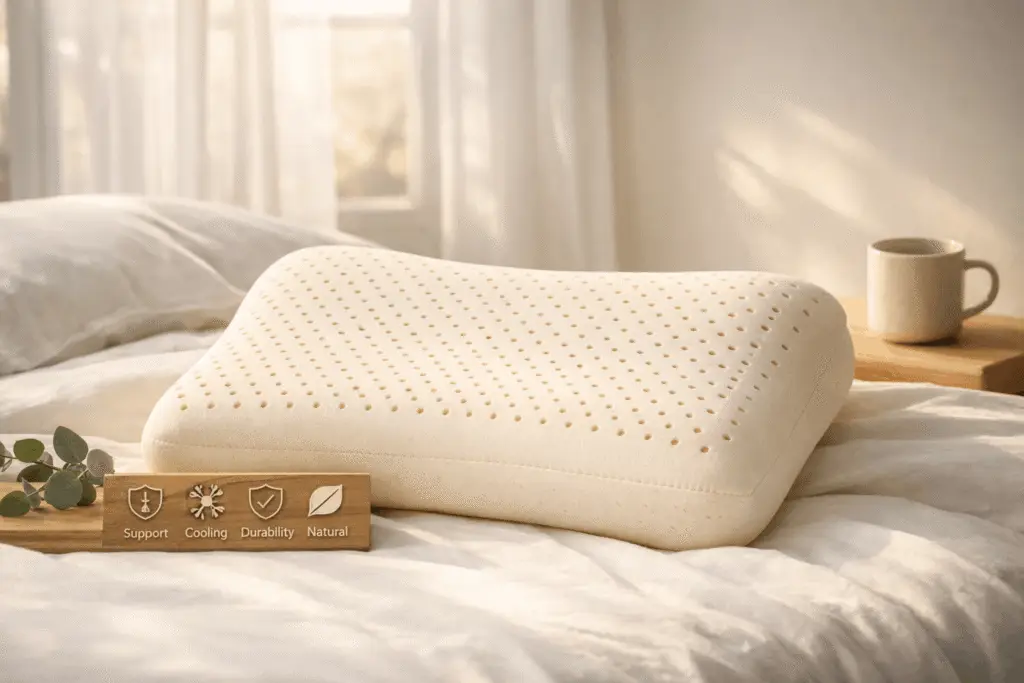
For years, I thought I just “slept normally.”
It wasn’t until I started waking up with neck stiffness and shoulder pain that I realized something important — I’m a side sleeper, and I was using the wrong pillow the entire time.
If you’re here, there’s a good chance you are too.
Let me walk you through what being a side sleeper actually means, why it matters more than you think, and how switching to the right memory foam pillow completely changed my sleep.
What Is a Side Sleeper?

A side sleeper is someone who sleeps primarily on their left or right side, with their shoulder against the mattress and their head resting on this side rather than facing upward.
But here’s what most articles don’t explain:
Being a side sleeper isn’t just about position — it’s about alignment.
When you sleep on your side:
- One shoulder absorbs pressure.
- Your neck must bridge the gap between your head and mattress.
- Your spine must remain straight from head to tailbone.
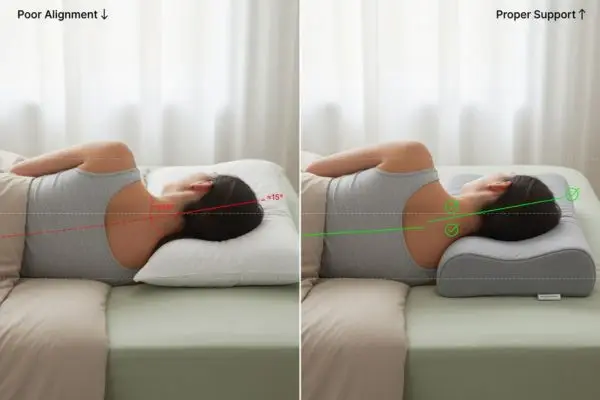
If your pillow is too flat, your head tilts downward.
If it’s too thick, your neck bends upward.
Both lead to pain.
That was exactly my problem.
Table of Contents
How I Realized I Was a True Side Sleeper
I used to rotate positions during the night, but every time I woke up, I was on my side. My shoulder felt compressed. My neck felt tight.
Side sleeping is actually the most common sleep position — and it’s often recommended for:
- Reducing snoring
- Improving digestion
- Supporting spinal health
- Pregnancy comfort
- Acid reflux relief
But it only works when your pillow supports you properly.
Why Side Sleepers Need a Different Pillow
Here’s what most people miss:
Side sleepers need higher loft + firmer support than back or stomach sleepers.
Why?
Because your pillow must fill the space between:
- Your ear
- Your shoulder
- The mattress
That gap is wider than you think.
If your pillow collapses during the night (like mine used to), your neck muscles stay engaged trying to stabilize your head. That’s why you wake up stiff.
After testing down, down-alternative, and even regular foam, I learned that memory foam was the only material that truly held its shape.
Why I Recommend Memory Foam for Side Sleepers
Memory foam works differently from traditional pillow fills.
Instead of flattening, it:
- Contours to your head
- Cradles your neck
- Maintains loft
- Distributes pressure evenly
The biggest difference I noticed?
I stopped waking up with shoulder tension.
My Memory Foam Pillow Guide for Side Sleepers
Here’s what I’ve personally learned matters most:
1. Loft (Height) Is Everything
Side sleepers need a medium-to-high loft.
If you have:
- Broad shoulders → Higher loft
- Narrow frame → Medium loft
- Combination sleeper → Adjustable loft
I prefer adjustable shredded memory foam because I can fine-tune the height.
2. Shredded vs Solid Memory Foam
Shredded Memory Foam
- Adjustable
- More breathable
- Slightly softer feel
- Great for combination sleepers
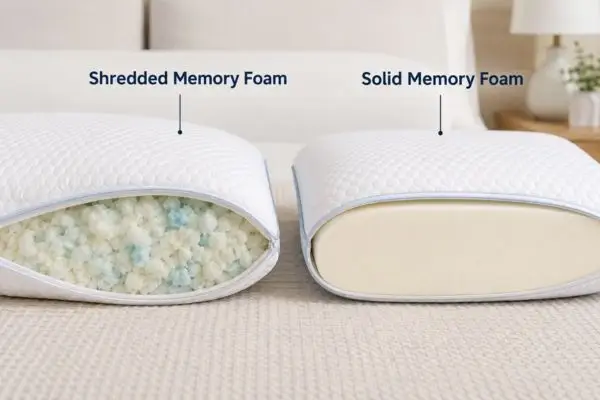
Solid Memory Foam
- Structured
- Maintains shape longer
- Firmer support
- Best for strict side sleepers
I personally lean toward shredded because I like customizing firmness.
3. Cooling Features Matter
Memory foam can trap heat.
If you’re a hot sleeper (I am), look for:
- Gel-infused foam
- Bamboo or breathable covers
- Ventilated foam cores
Switching to a cooling memory foam pillow made a noticeable difference for me.
My Honest Review: What Changed My Sleep
After testing several options, here’s what I’ve found works best for side sleepers:
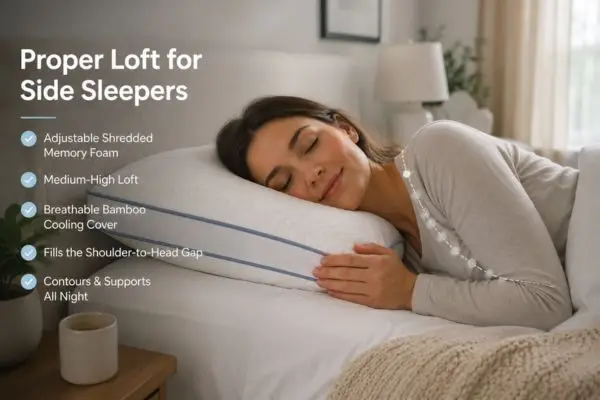
✅ Adjustable shredded memory foam
✅ Medium-firm feel
✅ Breathable cover
✅ Enough loft to keep neck level
What didn’t work for me:
❌ Down pillows (flattened overnight)
❌ Ultra-soft foam (not supportive enough)
❌ Low-loft pillows
The biggest transformation?
I no longer wake up repositioning my pillow constantly.
Signs You’re a Side Sleeper Using the Wrong Pillow

You might need a better pillow if:
- You wake up with neck stiffness.
- Your shoulder feels sore.
- You tuck your arm under your pillow.
- You constantly fluff your pillow.
- Your pillow looks flat by morning.
That was me — every single morning.
Who Should NOT Use a High-Loft Memory Foam Pillow?
Memory foam for side sleeping isn’t ideal if:
- You sleep primarily on your stomach.
- You prefer ultra-soft, sink-in pillows.
- You dislike structured support.
Otherwise, it’s one of the most supportive options available.
Helpful Resources on Side Sleeping & Memory Foam
Here are some helpful (non-duplicate) educational resources:
Mayo Clinic – Improving Sleep Posture
https://www.mayoclinic.org
Sleep Foundation – Side Sleeping Guide
https://www.sleepfoundation.org/sleeping-positions/side-sleeping
Cleveland Clinic – Sleep Positions & Spine Health
https://health.clevelandclinic.org
Johns Hopkins Medicine – Sleep and Neck Pain
https://www.hopkinsmedicine.org
Harvard Health – Choosing the Right Pillow
https://www.health.harvard.edu
Final Thoughts: Being a Side Sleeper Isn’t the Problem
For years, I blamed my mattress.
But the real issue was pillow support.
Once I understood what a side sleeper actually meant — and chose a memory foam pillow designed for that position — my sleep improved dramatically.
If you sleep on your side, your pillow isn’t just for comfort.
It’s spinal alignment.
And once you fix that, everything changes.