I’ll admit something slightly embarrassing: for years, I thought a pillow sham was just a fancy word for pillowcase.
I’d see beautifully styled beds in magazines — layered, plush, symmetrical — and assume they just used “better pillows.” It wasn’t until I started obsessing over bedding (and yes, testing way too many sets) that I finally understood what a pillow sham actually is — and why it completely changes the look of a bedroom.
If you’ve ever wondered whether pillow shams are necessary, decorative fluff, or secretly functional — this is my personal, no-fluff guide.
Table of Contents
So, What Is a Pillow Sham?
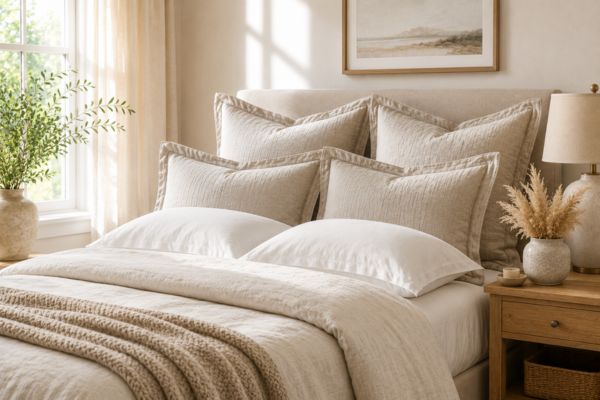
A pillow sham is a decorative cover designed to go over a standard, king, or Euro pillow. Unlike a regular pillowcase, it usually opens from the back (sometimes with an envelope closure or buttons) and is meant to be seen.
The simplest way I describe it:
A pillow sham is the outfit your pillow wears during the day.
It’s less about sleeping and more about styling. That said, I’ve absolutely fallen asleep on mine before — and lived to tell the tale.
Why I Started Using Pillow Shams
I used to make my bed quickly each morning and feel like something still looked unfinished. Even with nice sheets and a duvet, it lacked that “designed” feeling.
The first time I added Euro shams behind my sleeping pillows, everything changed. The bed instantly looked:
- Fuller
- More structured
- More luxurious
- Intentionally styled
It felt like I upgraded my entire bedroom without buying new furniture.
That’s when I realized pillow shams aren’t just decorative extras — they’re visual anchors.
Pillow Sham vs. Pillowcase: The Real Difference
Here’s the difference in practical terms:
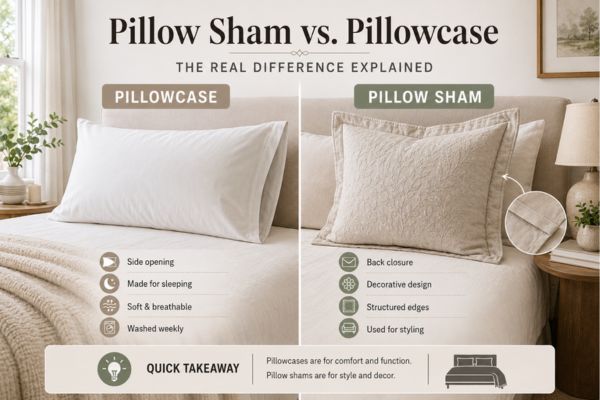
Pillowcase
- Opens on the side
- Designed for sleeping
- Made for comfort and breathability
- Washed frequently (ideally weekly)
Pillow Sham
- Usually opens in the back
- Often has a flange (that framed border edge)
- Meant for styling
- May feature texture, embroidery, quilting, or trim
I personally keep my sleeping pillows in simple cotton pillowcases, then layer shams over additional inserts for structure.
Think of it like this: pillowcases are functional. Shams are visual.
The Real Purpose of a Pillow Sham
Let’s be honest — they’re not essential.
But here’s what they actually do:
1. Elevate Your Bed Instantly
Even basic bedding looks high-end with structured shams layered in the back.
2. Create Depth and Dimension
Without shams, beds can look flat. Shams create vertical height and layering.
3. Protect Your Pillowcases
When you remove your sleeping pillows and prop decorative ones in front, your real pillowcases stay cleaner during the day.
4. Let You Change Your Style Cheaply
Swapping shams seasonally is far more affordable than replacing an entire duvet set.
Types of Pillow Shams (From My Own Testing)
Over the years, I’ve tried quite a few. Here’s my honest breakdown:
1. Standard Sham
Fits a standard sleeping pillow.
Best for: Simple, minimal layering.
I like using these when I don’t want too many layers.
2. King Sham
Longer version for king pillows.
Best for: Wide beds that need proportion balance.
If you have a king bed, standard shams can look undersized — I learned that the hard way.
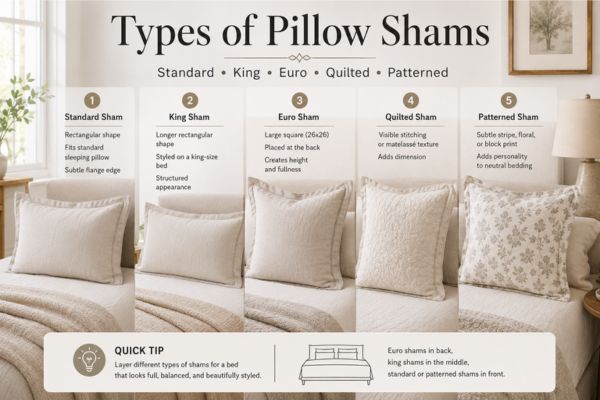
3. Euro Sham (My Favorite)
Large square pillow (usually 26” x 26”).
Best for: Creating that hotel-inspired look.
These are the secret weapon. Two or three Euro shams behind your regular pillows completely transform the bed.
4. Quilted or Textured Sham
Adds visual interest.
Best for: Neutral bedrooms that need dimension.
I especially love linen or matelassé textures for a relaxed but elevated look.
Do You Actually Sleep on Pillow Shams?
Here’s my honest answer: sometimes.
Technically, they aren’t designed for nightly sleeping. Some have stitching, embroidery, or heavier fabrics that aren’t ideal for your face.
What I do:
- Remove shams before bed
- Keep them on during the day
- Occasionally nap on them (no regrets)
If you plan to sleep on them regularly, choose soft cotton, percale, or linen — and wash them weekly.
How Often Should You Wash Pillow Shams?
This depends on how you use them.
If decorative only:

→ Once a month is usually fine.
If you sleep on them:
→ Every 7–10 days, just like pillowcase.
I personally wash mine monthly since they’re mostly for styling.
My Personal Pillow Sham Buying Checklist
If you’re shopping, here’s what I look for:
✔ Envelope back closure (clean look)
✔ Structured flange (for a polished edge)
✔ Fabric weight that matches my duvet
✔ Insert slightly larger than cover (for a fuller look)
✔ Easy-care fabric
Pro tip: Always use an insert that’s 1–2 inches larger than the sham cover. It makes everything look plush and intentional.
Are Pillow Shams Worth It?
If you care about bedroom aesthetics — absolutely.
If you just want something to sleep on — probably not necessary.
For me, they’re worth it because:
- They elevate the entire room
- They’re affordable compared to furniture upgrades
- They make my bed feel finished
And honestly? Walking into a styled bedroom at the end of the day feels calming in a way I didn’t expect.
My Quick Pillow Sham Recommendations
Here are styles I personally think work beautifully:
- Linen Euro shams for relaxed luxury
- Cotton percale for crisp, hotel vibes
- Quilted shams for cozy, layered bedrooms
- Neutral tones if you change bedding often
- Seasonal accent shams for small refreshes
Helpful Resources on Pillow Shams
Here are some useful (non-duplicate) resources to explore deeper:
- The Company Store Bedding Basics
https://www.thecompanystore.com/guides
- Architectural Digest Bedroom Styling Tips
https://www.architecturaldigest.com
- Brooklinen Bedding Education
https://www.brooklinen.com/blog
- Sleep Foundation Pillow Guide
https://www.sleepfoundation.org
Final Thoughts
I used to think pillow shams were unnecessary fluff.
Now? I won’t make a bed without them.
They’re the difference between a bed that looks “made” and a bed that looks styled.
And if you’re building a bedroom you truly love — that difference matters.