For years, I thought my neck pain was caused by stress.
Or my desk job.
Or my phone use.
Or just “getting older.”
What I didn’t consider was this: my best sleeping position was completely wrong for my cervical spine.
Once I understood how my neck should actually be aligned during sleep, everything changed. My stiffness reduced. My headaches became less frequent. And I stopped waking up feeling like I’d slept in a twisted position all night.
If you’re trying to find the best sleeping position for cervical spine health, here’s what I’ve learned — both from research and personal trial and error.
Table of Contents
Why Your Cervical Spine Needs Special Attention
Your cervical spine is the upper portion of your spine — the seven vertebrae in your neck.
It supports:
- The weight of your head (about 10–12 pounds)
- Your range of motion
- Your spinal cord protection
- Nerve pathways to your shoulders and arms
When your neck isn’t supported properly during sleep, muscles stay engaged instead of relaxing.
That’s why finding the best sleeping position for cervical spine alignment is so important.
What Is the Best Sleeping Position for Cervical Spine Health?
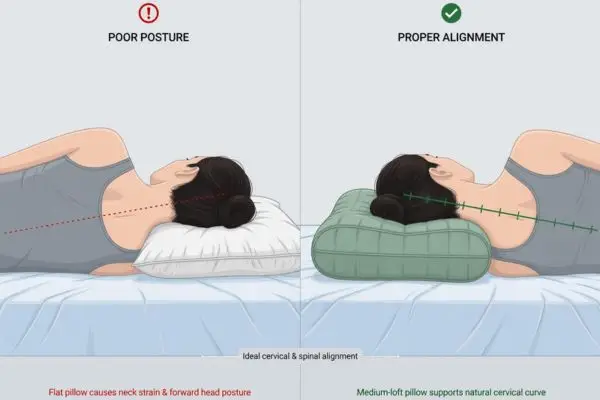
After testing different positions myself and adjusting my pillow setup, I found that the sleeping position for most people with neck discomfort is:
✅ Side sleeping with proper pillow height
OR
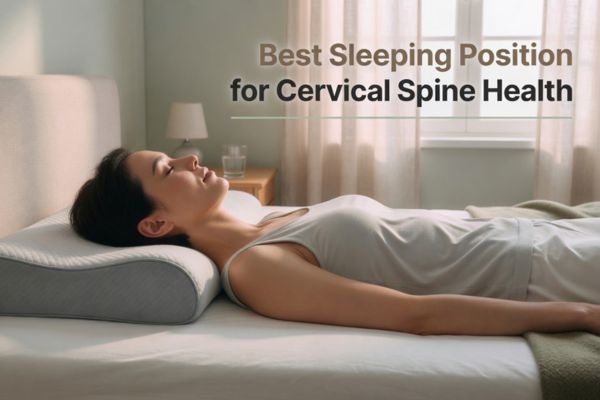
✅ Back sleeping with neutral head alignment
The keyword here is alignment.
The sleeping position isn’t just about comfort — it’s about keeping your head stacked directly above your spine.
1️⃣ Side Sleeping: My Personal Favorite for Neck Support
I naturally sleep on my side. But for years, I did it incorrectly.
My pillow was too soft. My head tilted downward. My shoulder pushed my neck upward.
Once I corrected my setup, side sleeping became the best sleeping position for my cervical spine.
Here’s what made the difference:
- A medium-to-high loft pillow
- Firm but contouring support
- Keeping my nose aligned with the center of my chest
- A pillow between my knees to prevent spinal twisting
When side sleeping maintains a straight line from head to hips, it becomes one of the best sleeping position choices for cervical support.
2️⃣ Back Sleeping: Excellent for Ne
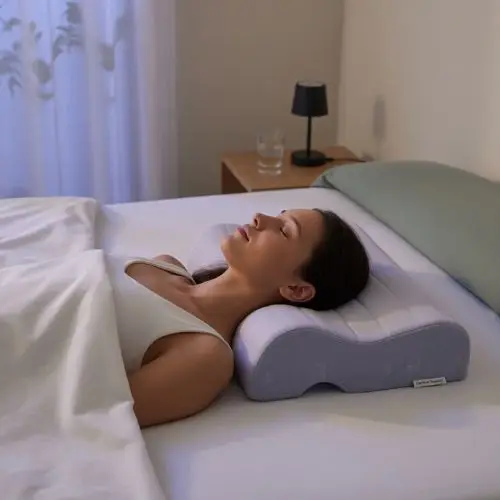
Back sleeping can also be the best sleeping position for cervical spine health — if done properly.
The mistake I used to make?
Using a pillow that was too thick.
Your head should not be pushed forward. That strains the neck.
For back sleepers, the best sleeping position setup includes:
- A medium-loft pillow
- Gentle cervical contour support
- Chin slightly tucked, not lifted.
- Shoulders relaxed flat against the mattress.
When your ears are aligned with your shoulders and your chin isn’t tilting upward, you’re close to the best sleeping position for maintaining natural neck curvature.
3️⃣ Why Stomach Sleeping Is NOT Ideal
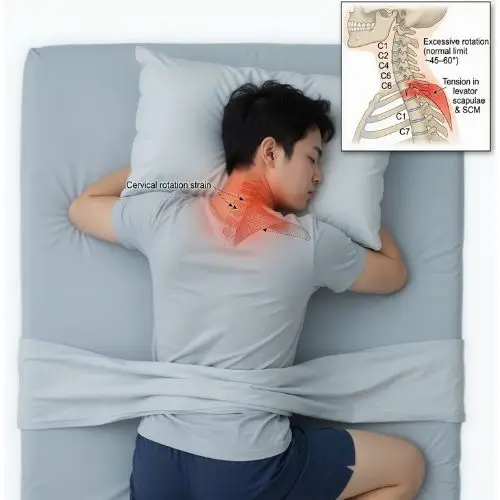
I used to fall asleep on my stomach occasionally.
But this is almost never the best sleeping position for cervical spine health.
Why?
Because your head must rotate to one side for hours. That twists the neck unnaturally and compresses joints.
Even with a flat pillow, your cervical spine remains rotated.
If you struggle with neck pain, avoiding sleeping on your stomach is one of the fastest improvements you can make.
The Real Secret: Pillow Matters as Much as Position
You can technically be in the best sleeping position, but if your pillow collapses, you lose alignment.
For cervical spine health, I now look for:
- Memory foam or supportive fill
- Height that matches shoulder width
- Consistent shape retention
- Cooling, breathable materials
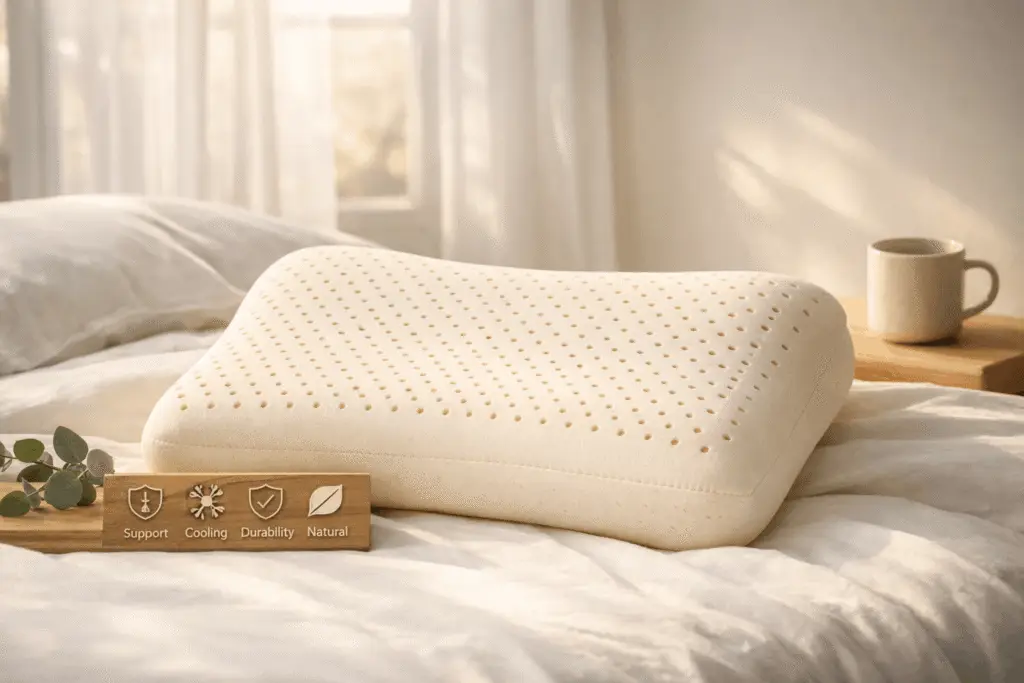
When I switched to a cervical-support memory foam pillow, I finally felt what the best sleeping position should feel like — stable and relaxed.
How I Tested My Own Alignment
Here’s something simple that helped me:
I had someone take a photo of me lying in my typical sleep position.
If your head tilts downward or upward, your pillow height is wrong.
The best sleeping position should show:
- Straight spine from head to mid-back
- Neutral chin placement
- No visible neck bend
Once I adjusted my pillow height, my morning stiffness reduced significantly.
Signs You’re NOT in the Best Sleeping Position
Before correcting mine, I experienced:
- Morning neck stiffness
- Shoulder tightness
- Tension headaches
- Arm numbness
- Frequent repositioning
If you notice these, your best sleeping position might not actually be supporting your cervical spine.
My Final Verdict on the Best Sleeping Position
After years of trial and adjustment, here’s my honest conclusion:
For most people, the best sleeping position for cervical spine health is:
👉 Side sleeping with proper pillow support
OR
👉 Back sleeping with neutral neck alignment
But the real magic happens when position and pillow work together.
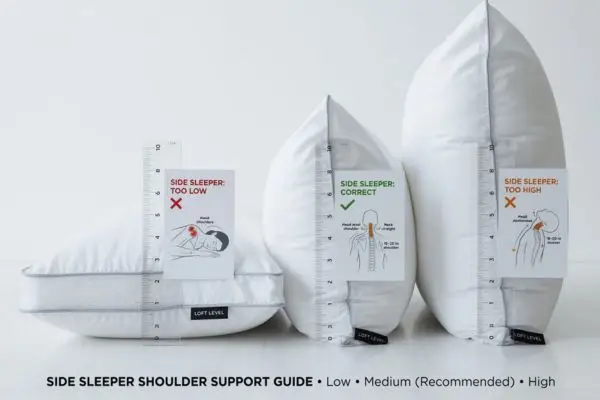
Once I stopped choosing softness and started choosing structural support, my sleep quality improved dramatically.
The best sleeping position isn’t just about how you fall asleep.
It’s about how your spine feels when you wake up.
Helpful Resources on Cervical Spine & Sleep Alignment
Here are credible educational resources for further reading:
Cleveland Clinic – Sleep Positions & Spine Health
https://health.clevelandclinic.org
Sleep Foundation – Best Sleeping Positions
https://www.sleepfoundation.org