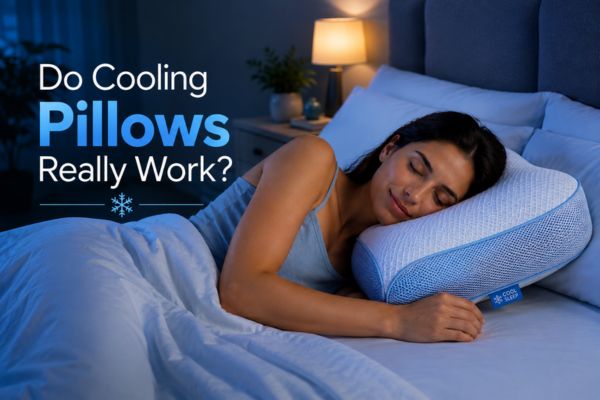
If you’re a hot sleeper like me, you’ve probably asked the same question I did:
Do cooling pillows work, or is it just marketing hype?
I used to flip my pillow multiple times a night searching for that “cool side.” I’d wake up warm, sometimes sweaty, and my regular memory foam pillow felt like it was trapping heat instead of helping me sleep.
After testing different materials, covers, and designs, I finally have a clear answer to the question: Do cooling pillows work?
Short answer: yes — but not in the way most people expect.
Let me break down what I learned.
Why We Overheat at Night
Before answering do cooling pillows work, it’s important to understand why we get hot in the first place.
Your body naturally cools down to fall asleep. That drop in temperature helps signal melatonin release — the hormone that makes you sleepy.
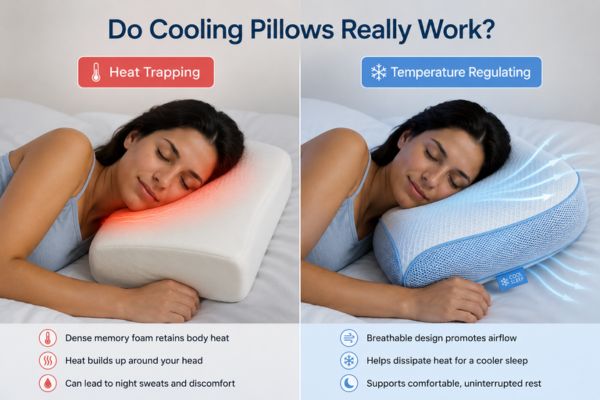
But if your pillow traps heat:
- Your head warms up
- Heat gets trapped near your face.
- Airflow decreases
- You wake up uncomfortable.
Traditional dense memory foam is notorious for holding heat. That’s when I started researching: do cooling pillows work better than standard foam?
What Makes a Pillow “Cooling”?
When brands say “cooling,” it doesn’t mean ice cold.
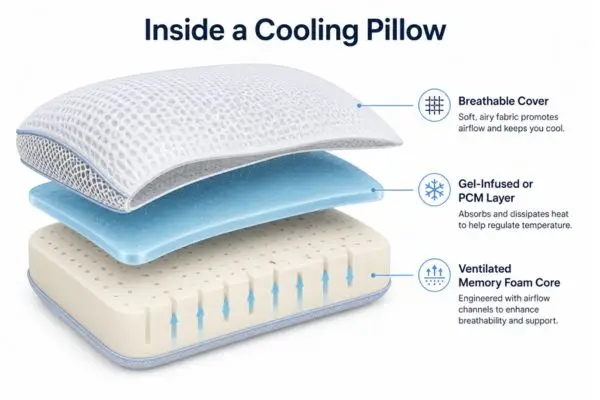
Cooling pillows usually rely on one or more of these features:
- Gel-infused foam
- Phase change materials (PCM)
- Breathable covers (bamboo, cotton blends)
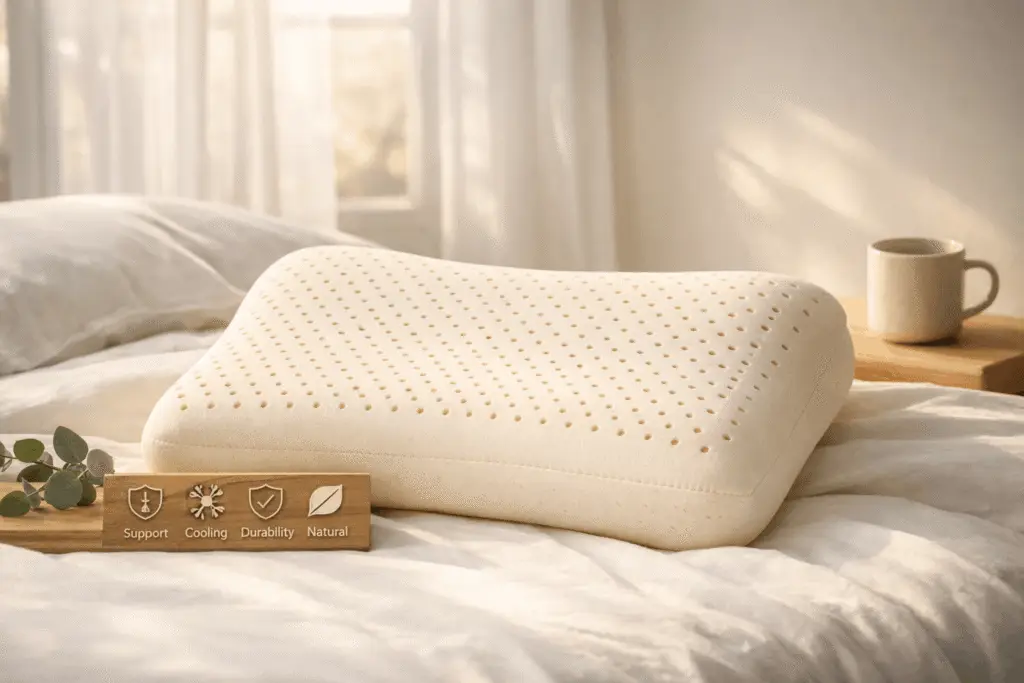
- Ventilated foam cores
- Shredded fill for airflow
So when people ask, ” Do cooling pillows work, the real question is: do these technologies actually regulate temperature?
From my experience, some do, some don’t.
My Testing Experience (What Actually Felt Different)
I tested three types of cooling pillows:
1️⃣ Gel-Infused Memory Foam
This type incorporates cooling gel beads or swirls into the foam.
At first touch, it felt slightly cooler than standard memory foam. But after 30–40 minutes, it warmed up.
So, do cooling pillows work when gel is added?
Yes, but the effect is mild. It delays heat buildup rather than eliminating it.
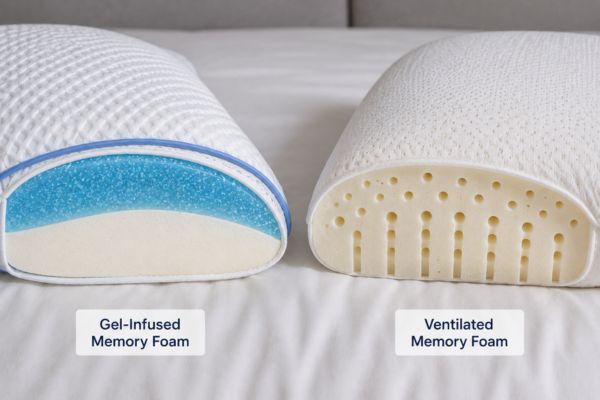
2️⃣ Ventilated Memory Foam
This version has small air channels running through the foam.
This was noticeably better. Air circulated more freely, and I didn’t feel trapped heat under my head.
When I asked whether cooling pillows work, I found that ventilation made a bigger difference than gel alone.
3️⃣ Phase Change Material (PCM)
This is the most interesting technology. PCM absorbs heat when your body temperature rises and releases it when you cool down.
Out of everything I tested, this felt the most consistent.
It didn’t feel cold — but it didn’t get hot either.
That’s when I started confidently saying, yes, do cooling pillows work when they include real temperature-regulating layers.
What Cooling Pillows Don’t Do
Let’s clear something up.
If you expect an ice-cold pillow all night, you’ll be disappointed.
When people ask do cooling pillows work, they often imagine something refrigerated.
That’s not the goal.
Cooling pillows aim to:
- Reduce heat retention
- Improve airflow
- Prevent overheating
- Maintain neutral temperature
They regulate — they don’t freeze.
Who Actually Benefits Most?
From my experience, cooling pillows work best for:
✅ Hot sleepers
✅ People who use memory foam
✅ Side sleepers who bury their face in the pillow
✅ Those living in warmer climates
✅ Anyone waking up sweaty
If you rarely overheat, you might not notice a dramatic difference.
But for hot sleepers? Yes, do cooling pillows work — especially high-quality ones.
The Cover Matters More Than You Think
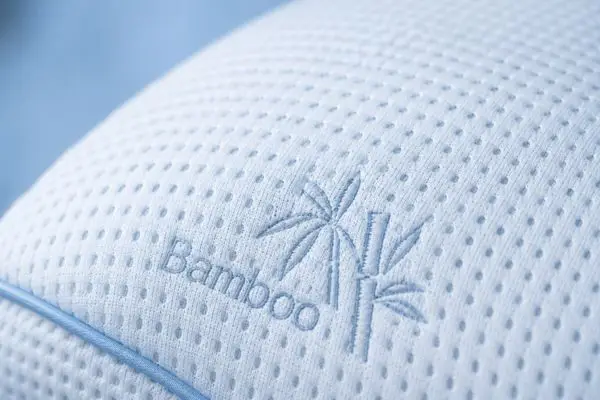
One surprising discovery:
The pillow cover often impacts cooling more than the foam inside.
Breathable fabrics like:
- Bamboo-derived viscose
- Cotton blends
- Moisture-wicking polyester
Made a noticeable difference.
When testing, I realized that cooling pillows work partly depending on airflow around your face — not just the core.
How Long Does the Cooling Effect Last?
Another common concern: durability.
In my experience:
- Cheap gel pillows lose effectiveness quickly.
- High-quality ventilated foam holds up better.
- PCM layers maintain consistent performance
If someone asks me today, ” Do cooling pillows work long-term?
I’d say yes — but only if you invest in quality materials.
My Honest Verdict
So, after months of testing, here’s my straightforward answer:
Do cooling pillows work? Yes — when designed properly.
They won’t feel icy.
They won’t eliminate heat completely.
But they reduce overheating and improve airflow.
For me, that meant:
- Fewer middle-of-the-night pillow flips.
- Less facial sweating
- More consistent sleep
And that alone made them worth it.
Tips Before You Buy
If you’re wondering if cooling pillows work enough to justify buying one, consider this checklist:
✅ Look for ventilated foam
✅ Choose breathable cover materials
✅ Consider adjustable shredded fill
✅ Avoid overly dense solid foam without airflow
✅ Check real user reviews
Not all cooling pillows are created equal.
When Cooling Isn’t Enough
If you’re still overheating after switching pillows:
- Lower room temperature (60–67°F ideal)
- Use breathable sheets
- Consider a cooling mattress topper.
- Reduce heavy blankets
Cooling pillows help — but they’re one piece of the puzzle.
Helpful Resources
For more research-backed information about sleep temperature and regulation:
- Sleep Foundation – Temperature and Sleep
https://www.sleepfoundation.org - Cleveland Clinic – Why You Overheat at Night
https://my.clevelandclinic.org - Mayo Clinic – Sleep Hygiene Guide
https://www.mayoclinic.org - Harvard Health – Improving Sleep Quality
https://www.health.harvard.edu - National Sleep Foundation
https://www.thensf.org
Final Thoughts
I used to think cooling pillows were just marketing.
Now I know the better question isn’t just do cooling pillows work — it’s which cooling pillows work best.
If you’re constantly flipping your pillow in search of the cool side, a well-designed cooling pillow can absolutely improve your sleep comfort.
For me, it wasn’t hype.
It was smarter temperature control.