Getting quality sleep starts with one simple thing: choosing the right pillow. Many people spend hours researching mattresses but ignore the importance of a pillow. A poor pillow can lead to neck pain, shoulder stiffness, headaches, poor posture, and restless sleep. If you have ever woken up feeling uncomfortable, it may be time to learn how to choose a pillow that actually supports your body and sleeping style.
In this detailed guide, you will discover how to choose a pillow based on sleep position, pillow material, firmness, loft, cooling features, allergies, and more.

Why Learning How to Choose a Pillow Matters
Many people underestimate the importance of a pillow. Your pillow supports your head, neck, shoulders, and spine while you sleep. When you understand how to choose a pillow, you can reduce body pain and improve sleep quality.
A bad pillow may cause:
- Neck pain
- Shoulder tension
- Poor spinal alignment
- Snoring
- Headaches
- Interrupted sleep
A good pillow helps maintain proper posture and comfort throughout the night. That is why learning how to choose a pillow is essential for every sleeper.
Table of Contents
How to Choose a Pillow Based on Your Sleeping Position
Your sleeping position is the most important factor when deciding how to choose a pillow. Different sleep positions require different levels of support and firmness.
Side Sleepers
Side sleepers need a thicker and firmer pillow because there is more space between the head and mattress. A pillow that is too flat can strain the neck.
Best Pillow Features for Side Sleepers
- High loft pillow
- Firm support
- Memory foam or latex material
- Contour shape for neck support
If you sleep on your side, understanding how to choose a pillow with proper loft can prevent neck pain and shoulder discomfort.
Back Sleepers
Back sleepers need medium support to maintain natural spinal alignment. A pillow that is too high may push the head forward.
Best Pillow Features for Back Sleepers
- Medium loft
- Medium firmness
- Memory foam or down alternative
- Neck support design
For back sleepers, learning how to choose a pillow means finding balance between comfort and support.
Stomach Sleepers
Stomach sleeping puts pressure on the neck. A thin and soft pillow usually works best.
Best Pillow Features for Stomach Sleepers
- Low loft pillow
- Soft feel
- Lightweight material
- Adjustable filling
Stomach sleepers should carefully learn how to choose a pillow because the wrong pillow can cause severe neck strain.
How to Choose a Pillow by Material
The pillow material affects comfort, support, durability, and cooling performance. Understanding pillow materials is an important part of learning how to choose a pillow.
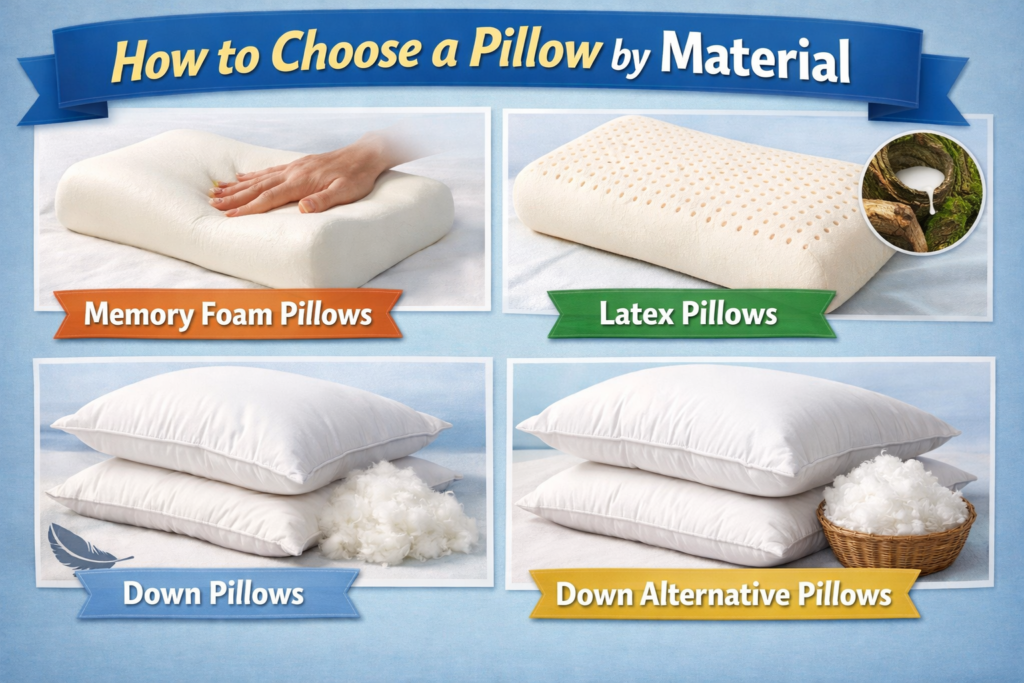
Memory Foam Pillows
Memory foam pillows contour to the shape of your head and neck. They provide excellent support and pressure relief.
Pros
- Great neck support
- Reduces pressure points
- Durable
- Ideal for neck pain
Cons
- Can retain heat
- Some people dislike the dense feel
Memory foam is one of the most popular choices for people researching how to choose a pillow for pain relief.
Latex Pillows
Latex pillows are naturally responsive and breathable. They provide firm support while staying cool.
Pros
- Long-lasting
- Cooling properties
- Natural materials available
- Resistant to dust mites
Cons
- More expensive
- Heavier than other pillows
Latex is an excellent option if you are learning how to choose a pillow for durability and cooling comfort.
Down Pillows
Down pillows are soft and luxurious. They are filled with feathers from ducks or geese.
Pros
- Soft and fluffy
- Lightweight
- Molds easily to the head
Cons
- Less support
- May trigger allergies
- Requires regular fluffing
Some sleepers prefer down pillows when learning how to choose a pillow for softness and hotel-like comfort.
Down Alternative Pillows
These pillows mimic the softness of down using synthetic materials.
Pros
- Affordable
- Allergy-friendly
- Soft and comfortable
Cons
- Less durable
- Can flatten over time
Down alternative pillows are popular for budget-conscious buyers researching how to choose a pillow.
How to Choose a Pillow Based on Loft
Firmness determines how soft or supportive a pillow feels.
Soft Pillows
- Best for stomach sleepers
- Plush and compressible
Medium Pillows
- Good for back sleepers
- Balanced comfort and support
Firm Pillows
- Best for side sleepers
- Maximum neck support
Learning how to choose a pillow based on firmness can prevent muscle strain and discomfort.
How to Choose a Pillow for Neck Pain
Neck pain is one of the most common sleep-related problems. If you suffer from stiffness or pain, understanding how to choose a pillow becomes even more important.
Best Features for Neck Pain
- Contour design
- Memory foam support
- Medium-to-firm feel
- Proper loft for your sleep position
A pillow should keep your neck aligned with your spine. Cervical pillows are especially useful for chronic neck pain.
How to Choose a Pillow for Shoulder Pain
Shoulder pain often affects side sleepers. The wrong pillow may create pressure around the shoulder area.
Tips for Shoulder Pain
- Use a high loft pillow
- Choose pressure-relieving foam
- Avoid pillows that flatten quickly
When learning how to choose a pillow, shoulder support is essential for side sleepers.
How to Choose a Pillow for Hot Sleepers
Many people struggle with overheating during sleep. Cooling technology is now a major factor in choose a pillow
Cooling Pillow Features
- Gel-infused foam
- Breathable covers
- Latex construction
- Ventilated design
- Moisture-wicking fabric
Cooling pillows help regulate temperature and improve comfort throughout the night.
How to Choose a Pillow for Allergies
Dust mites, mold, and allergens can build up in pillows over time.
Best Allergy-Friendly Materials
- Latex
- Memory foam
- Hypoallergenic polyester
Additional Tips
- Use washable pillow covers
- Replace pillows regularly
- Wash pillows every few months
People with allergies should carefully research choose a pillow with hypoallergenic features.
How to Choose a Pillow for Kids
Children also need proper neck and spinal support.
Best Pillow Features for Kids
- Small size
- Soft-medium firmness
- Breathable materials
- Hypoallergenic fabric
Parents should understand how to choose a pillow that matches a child’s age and sleep position.
Adjustable Pillows: A Popular Modern Choice
Adjustable pillows allow users to add or remove filling for customized comfort.
Benefits
- Personalized loft
- Works for multiple sleep positions
- Better long-term comfort
Adjustable pillows are becoming increasingly popular among people learning how to choose a pillow for changing sleep needs.
Signs You Need a New Pillow
Even the best pillow does not last forever.
Common Signs
- Pillow feels flat
- You wake up with pain
- Pillow has lumps
- You sleep better elsewhere
- Allergies worsen at night
Experts generally recommend replacing pillows every 1–2 years depending on the material.
Common Mistakes People Make When Choosing a Pillow
Understanding mistakes is part of learning choose a pillow wisely.
Buying Based Only on Price
Cheap pillows may lose support quickly.
Ignoring Sleep Position
A pillow should match how you sleep.
Choosing the Wrong Loft
Too high or too low can strain the neck.
Forgetting Cooling Features
Hot sleepers often overlook temperature regulation.
Hot sleepers often overlook temperature regulation.
How to Test a Pillow Before Buying
If possible, test the pillow before purchasing.
Things to Check
- Neck alignment
- Comfort level
- Support
- Material feel
- Breathability
Learning a pillow includes understanding how your body reacts to different pillow types.
Best Pillow Types for Different Sleepers
| Sleeper Type | Recommended Pillow |
| Side Sleeper | Firm memory foam or latex |
| Back Sleeper | Medium loft foam pillow |
| Stomach Sleeper | Soft low loft pillow |
| Hot Sleeper | Cooling gel pillow |
| Neck Pain | Contour memory foam pillow |
| Allergy Sufferer | Hypoallergenic latex pillow |
This simple comparison helps simplify how to choose a pillow based on individual needs.
Pillow Care Tips for Longer Lifespan
Proper maintenance keeps your pillow clean and supportive.
Easy Care Tips
- Use a pillow protector
- Wash covers weekly
- Air out pillows regularly
- Replace when support fades
Good maintenance is another important part of learning how to choose a pillow and keeping it comfortable over time.
Conclusion How to Choose a Pillow
Choosing the right pillow can completely transform your sleep quality. Many people struggle with neck pain, shoulder tension, overheating, and poor sleep simply because they are using the wrong pillow. Once you understand how to choose a pillow, you can find the perfect combination of comfort and support for your body.
The best pillow depends on your sleeping position, body type, firmness preference, and health needs. Side sleepers usually need firm high-loft pillows, while stomach sleepers need softer and thinner options. Materials like memory foam, latex, and cooling gel each provides unique benefits.
When researching choose a pillow, always focus on spinal alignment, comfort, durability, and breathability. Investing in the right pillow is investing in better health and better sleep.
A quality pillow may seem simple, but it plays a major role in how you feel every morning. Take your time, understand your sleep habits, and choose wisely. Your neck, shoulders, and entire body will thank you