For a long time, I assumed back sleeping was the “easy” position.
After all, you’re flat. Neutral. Supported.
But I kept waking up with tension at the base of my skull.
That’s when I realized something important:
The mattress wasn’t the issue — my pillow was.
So I went down the rabbit hole searching for the best pillows for back sleepers, and after testing foam, latex, down, adjustable inserts, and even wedge designs, I finally figured out what truly works.
If you’re trying to find the best pillows for back sleepers, here’s what actually matters — not just what product lists say.
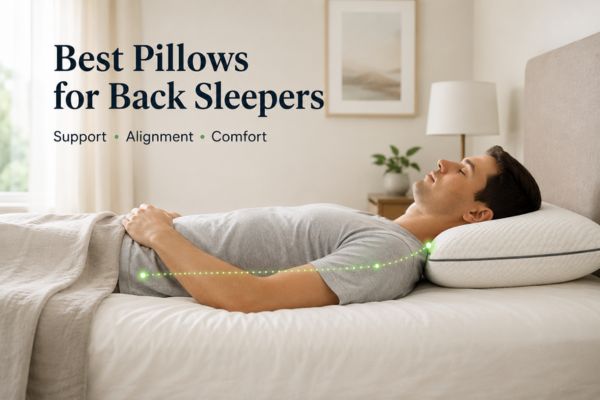
Table of Contents
Why Back Sleepers Need a Specific Pillow
When you sleep on your back, your neck naturally curves forward (a small “C” shape).
Your pillow should:
✅ Support that curve
✅ Keep your chin neutral (not tucked, not lifted)
✅ Prevent your head from tilting too far back
✅ Avoid flattening overnight
Most people shopping for the best pillows for back sleepers don’t realize that too much loft is just as bad as too little.
What Makes the Best Pillows for Back Sleepers?
After testing several types, I learned these are the critical factors:
✅ 1. Medium Loft (Usually 4–6 Inches)
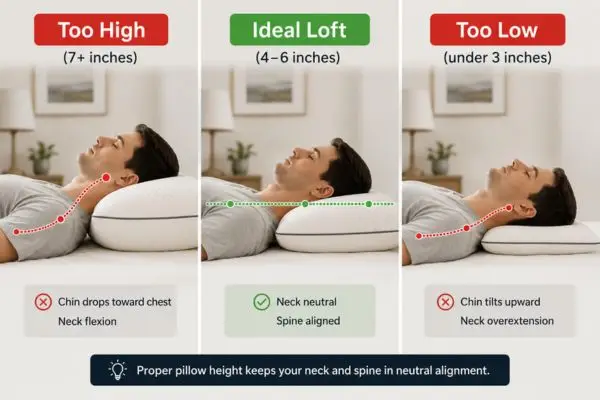
Too high → chin drops toward chest
Too low → neck overextends
The best pillows for back sleepers sit in that middle zone.
✅ 2. Medium-Firm Support
Soft pillows feel nice at first but flatten quickly.
The best pillows for back sleepers maintain their shape overnight.
✅ 3. Controlled Contouring
You want slight molding — not deep sinkage.
Memory foam and latex do this best.
My Personal Testing Experience
I tested:
- Soft down pillow
- Extra-firm latex
- Solid memory foam
- Adjustable shredded foam
- Budget polyfill
Here’s what surprised me:
The soft down pillow felt amazing for 10 minutes — then my neck sagged.
The extra-firm latex was supportive — but slightly too high for my frame.
The sweet spot?
Medium-firm memory foam and responsive latex.
That’s when I finally found options that truly qualify as the best pillows for back sleepers.
Best Pillow Types for Back Sleepers
Let’s break it down clearly.
🟢 Memory Foam (Best Overall for Alignment)
Pros:
- Molds gently to the neck curve.
- Holds shape overnight
- Excellent for neck tension
Cons:
- Can retain heat
- Needs correct loft selection
For many people, solid memory foam makes for some of the best pillows for back sleepers.
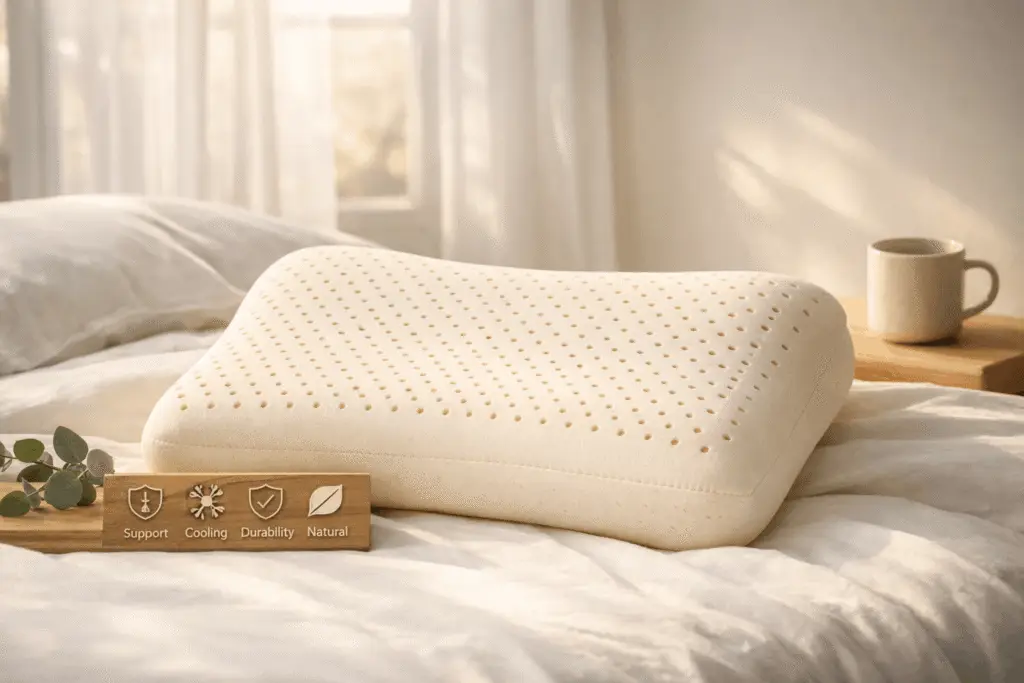
🟢 Latex (Best for Cooling + Durability)
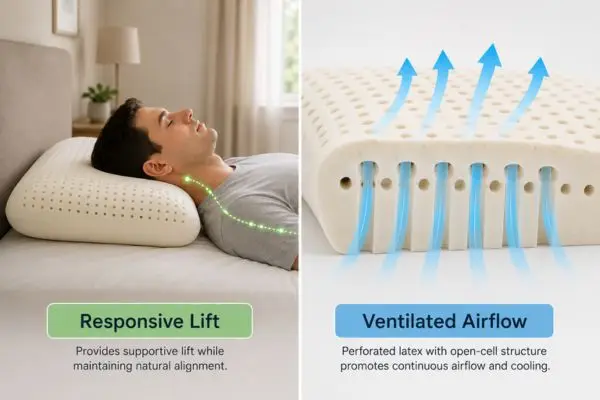
Pros:
- Responsive support
- Excellent airflow
- Longer lifespan
Cons:
- Slightly more expensive
- Less “hugging” feel
Latex often outperforms foam in longevity among the best pillows for back sleepers.
🟢 Adjustable Pillows (Best for Customization)
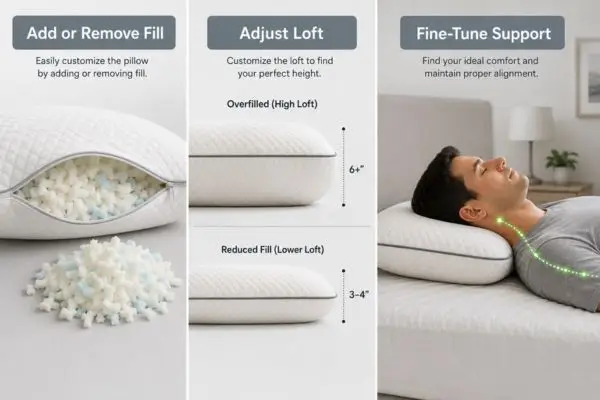
These allow you to:
- Add/remove fill
- Adjust loft
- Fine-tune support
If you’re unsure about ideal height, adjustable models can become some of the best pillows for back sleepers for your body.
🟢 Down (Comfort First, Support Second)
Down works if:
- Loft is medium
- The fill is dense
- You’re willing to fluff nightly.
But down is usually not my first recommendation among the best pillows for back sleepers if neck pain is a concern.
The Shoulder Width Factor (Most Articles Skip This)
Back sleepers still need to consider:
- Neck length
- Shoulder width
- Body weight
Broader shoulders may need slightly more loft.
Petite frames may need slightly less.
The best pillows for back sleepers are not one-size-fits-all.
Mattress Firmness Changes Everything
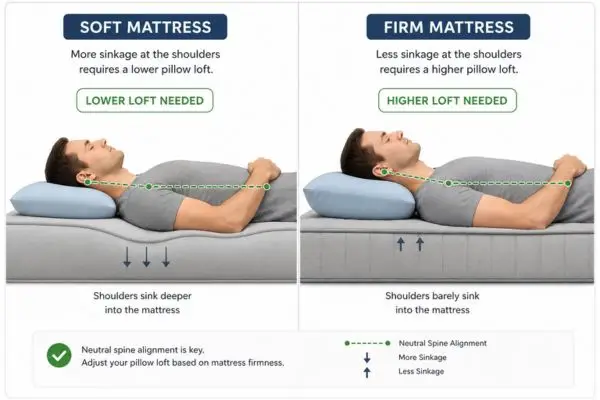
Soft mattress:
Your shoulders sink deeper → you may need a slightly lower pillow.
Firm mattress:
Your body stays elevated → you may need a slightly higher pillow.
Many people searching for the best pillows for back sleepers forget to match their pillows to their mattresses.
Signs Your Pillow Is Wrong
You might not have found the best pillows for back sleepers yet if:
- You wake up with neck stiffness.
- Your chin tilts downward.
- You feel pressure at the base of the skull.
- You constantly adjust the pillow.
- You wake up with a mild headache.
Budget vs Luxury Options
You don’t need to spend $200.
Good memory foam options exist under $80.
Latex typically costs more but lasts longer (3–4 years).
When shopping for the best pillows for back sleepers, think in cost-per-year value.
My Final Verdict
After months of trial and error, here’s my conclusion:
The best pillows for back sleepers combine:
- Medium loft
- Medium-firm support
- Stable shape retention
- Breathable material
Right now, I personally rotate between:
- Medium-firm solid memory foam (primary)
- Latex pillow (warmer months)
Both keep my neck neutral and reduce morning stiffness.
Quick Comparison Table
| Memory Foam | Medium | Medium-Firm | Neck alignment |
| Latex | Medium | Medium-Firm | Cooling + durability |
| Adjustable | Custom | Custom | Precision fit |
| Down | Medium | Soft-Medium | Plush feel lovers |
Final Thoughts
Finding the best pillows for back sleepers isn’t about softness.
It’s about:
- Supporting your cervical curve
- Matching loft to your body
- Preventing chin tilt
- Maintaining shape overnight
When your pillow is right, you stop thinking about it.
And that’s the real goal.
✅ FAQ Section
What loft is best for back sleepers?
Most back sleepers do best with a medium-loft (4–6 inches) pillow that supports the natural neck curve.
Are firm pillows good for back sleepers?
Medium-firm pillows are ideal. Too soft flattens; too firm may push the head forward.
Is memory foam or latex better for back sleepers?
Both work well. Memory foam contours more; latex offers more lift and cooling.
How often should back sleepers replace pillows?
Memory foam: 2–3 years
Latex: 3–4 years
Down: 1–2 years
Can the wrong pillow cause headaches?
Yes. Poor neck alignment can create tension at the base of the skull.