

For years, I never thought about replacing my pillow.
I replaced sheets.
I replaced mattresses.
But pillows? I assumed they lasted forever.
Then I started waking up stiff.
That’s when I asked myself seriously:
How Often Should You Replace Your Pillow?
The answer surprised me.
And if you’re waking up sore, congested, or constantly fluffing your pillow — you might be overdue too.
Table of Contents
The Short Answer: How Often Should You Replace Your Pillow?
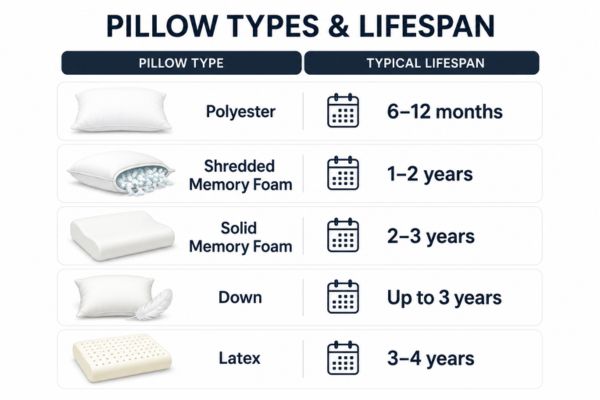
Most pillows should be replaced every:
- ✅ 6–12 months (low-quality polyester)
- ✅ 1–2 years (shredded memory foam)
- ✅ 2–3 years (solid memory foam)
- ✅ 3–4 years (latex)
- ✅ Up to 3 years (down with proper care)
But here’s the part most guides skip:
It’s not just about time.
It’s about support.
Why Pillow Replacement Matters More Than You Think
Your pillow supports your neck for 6–8 hours every night.
When it loses structure:
- Your head tilts downward.
- Your neck bends
- Muscles strain
- Alignment fails
That’s when people start asking:
“Why does my neck hurt in the morning?”
Often, the real question should be:
How Often Should You Replace Your Pillow?
My Wake-Up Call
I kept adjusting my pillow every night.
Folding it. Flipping it. Punching it.
Eventually, I realized my 4‑year‑old pillow had completely lost its resilience.
Once I replaced it, my morning stiffness noticeably improved.
That’s when I truly understood the importance of asking:
How Often Should You Replace Your Pillow?
How to Know It’s Time (Even If It Looks Fine)
Age alone isn’t enough.
Here’s how to test your pillow at home.
✅ 1️⃣ The Fold Test
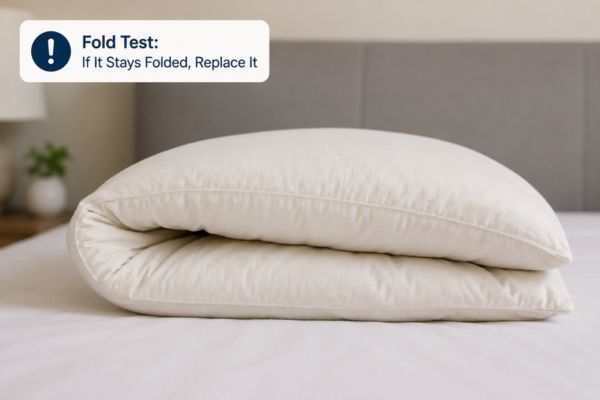
Fold your pillow in half.
If it stays folded and doesn’t bounce back → it’s done.
This is one of the simplest ways to determine:
How Often Should You Replace Your Pillow?
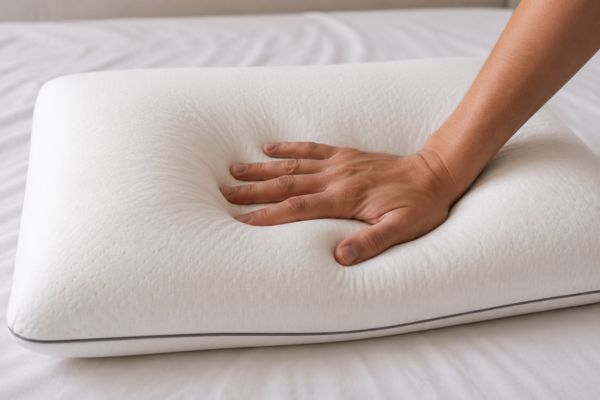
✅ 2️⃣ The Compression Test
Press firmly in the center.
Does it slowly return?
Or stay indented?
Collapsed foam = poor support.
✅ 3️⃣ The Allergy Clue

If you notice:
- More sneezing at night
- Congestion in the morning
- Itchy eyes
Your pillow may be harboring:
- Dust mites
- Dead skin cells
- Moisture
Another sign you’re overdue when asking:
How Often Should You Replace Your Pillow?
✅ 4️⃣ The Neck Pain Pattern
Morning neck stiffness that improves during the day is often a support issue.
If that’s happening, don’t just stretch — evaluate:
How Often Should You Replace Your Pillow?
Lifespan by Pillow Type (Detailed Breakdown)
🟢 Polyester Fill
Cheapest type.
Lifespan: 6–12 months.
Flattens quickly.
Poor long-term support.
🟢 Shredded Memory Foam
Lifespan: 1–2 years.
Better airflow.
Adjustable.
Settles over time.
You may need to replace sooner if you’re a heavy side sleeper.
🟢 Solid Memory Foam
Lifespan: 2–3 years.
Retains structure longer.
May develop a permanent indent.
🟢 Latex Pillow
Lifespan: 3–4 years.
Highly resilient.
It holds its shape well.
Better longevity.
🟢 Down & Feather
Lifespan: Up to 3 years.
Requires frequent fluffing.
May lose loft unevenly.
Does Budget Affect Lifespan?
Yes.
A cheap foam pillow may degrade within 12 months.
A well-made mid-range pillow may last 2–3 years.
That’s why when someone asks:
How Often Should You Replace Your Pillow?
The answer partly depends on quality.
The Hygiene Factor
Even if support feels “okay,” hygiene matters.
Over time, pillows accumulate:
- Sweat
- Skin oils
- Dust mites
- Bacteria
That’s why experts often say:
Even if it feels fine, replace it every 2 years maximum.
How Washing Extends Lifespan
- Wash covers monthly
- Use a pillow protector
- Dry thoroughly
- Air out regularly
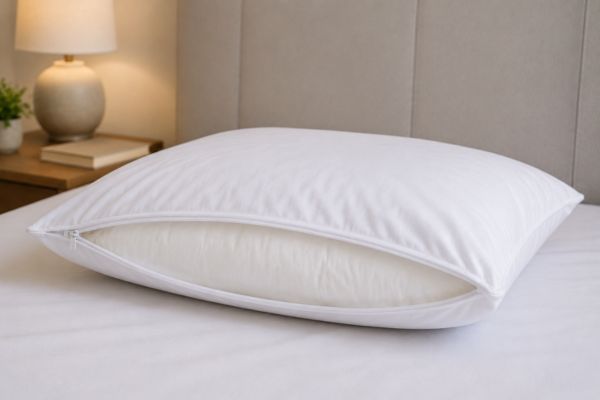
Proper care extends lifespan — but doesn’t eliminate the eventual need for replacement.
You still must ask:
How Often Should You Replace Your Pillow?
Mattress Interaction (Most Guides Ignore This)
If you switch mattresses:
- Soft mattress → shoulder sinks → pillow compresses differently.
- Firm mattress → pillow bears more load
Sometimes people replace their mattress and suddenly wonder why they’re uncomfortable.
The answer might not be mattress — it might be:
Environmental Signs: It’s Time
Replace immediately if:
- Yellowing with odor
- Mold smell
- Lumps or clumps
- Visible foam breakdown
What Happens If You Don’t Replace It?
Ignoring the timeline can lead to:
- Chronic neck tension
- Headaches
- Shoulder pain
- Restless sleep
- Increased allergy symptoms
The longer you delay asking:
How Often Should You Replace Your Pillow?
The more discomfort accumulates.
My Personal Replacement Rule
Now I follow this:
- Memory foam → 2 years max
- Shredded foam → 18 months
- Latex → 3 years
- Polyester → under 1 year
I don’t wait for pain anymore.
Final Verdict
If you’re unsure whether it’s time, ask yourself:
Have I had this pillow longer than 2 years?
If yes — it’s likely time.
When in doubt, prioritize support and hygiene.
Because the real question isn’t just:
How Often Should You Replace Your Pillow?
It’s:
How long do you want to wake up uncomfortable?
✅ FAQ Section
How often should you replace your pillow if you have neck pain?
If you wake up with morning stiffness, consider replacing it every 1–2 years, especially if it’s memory foam or polyester.
Can a pillow last 5 years?
Most pillows lose structural integrity before 5 years. Latex may last the longest, but support typically declines after 3–4 years.
How do I know if my memory foam pillow is bad?
If it has permanent indentations, fails the fold test, or causes morning neck pain, it’s time to replace it.
Do pillow protectors extend lifespan?
Yes. They reduce moisture and allergen buildup, but they don’t prevent foam degradation.
Should side sleepers replace pillows more often?
Often yes. Side sleepers place more compression on pillows, causing faster breakdown.