
I used to wake up every morning with that dull ache in my lower back.
Not sharp pain.
Not injury pain.
Just stiffness that made me feel 10 years older.
That’s when I started searching:
How to properly use a wedge pillow for lower back pain?
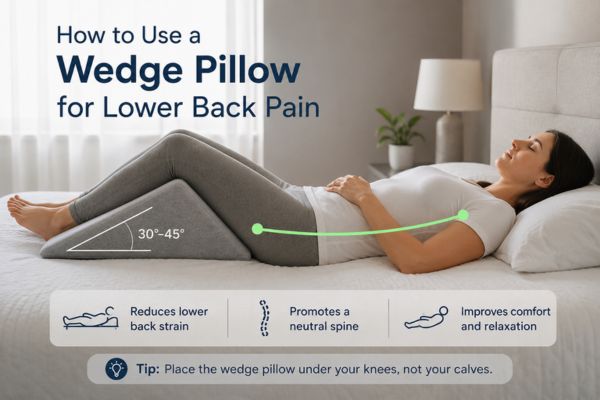
I had heard wedge pillows help. I bought one. I placed it under my knees.
And… nothing changed.
Turns out, just owning a wedge pillow isn’t enough.
Learning how to use a wedge pillow for lower back pain correctly made all the difference.
If you’re struggling with back stiffness, here’s what I learned through real testing and adjustment.
Why a Wedge Pillow Helps Lower Back Pain
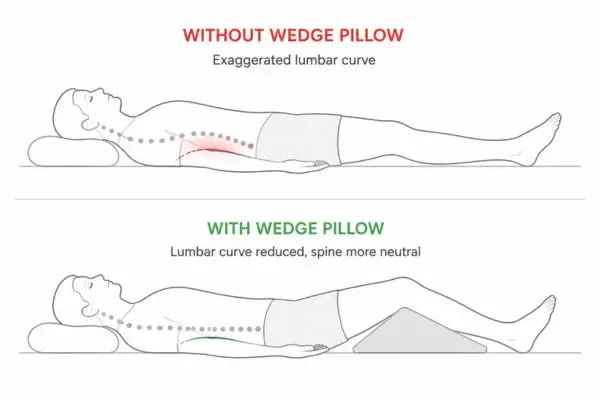
Your lower back naturally curves inward (lumbar curve).
When lying flat:
- That curve can exaggerate
- Muscles stay slightly engaged.
- Discs experience uneven pressure.
When you elevate your legs properly:
- The pelvis tilts slightly backward.
- The lumbar curve relaxes.
- Pressure reduces
- Muscles release
That’s the principle behind how to use a wedge pillow for lower back pain effectively.
The Most Important Concept: Pelvic Tilt
Most articles don’t explain this.
When you place a wedge under your knees:
- Your hips bend
- Your pelvis rotates backward.
- Your lower spine flattens slightly.
That small shift reduces strain on lumbar discs.
Understanding this helps you use the wedge intentionally — not randomly.
How to Use a Wedge Pillow for Lower Back Pain (Step-by-Step)
Let’s break it down practically.
✅ Method 1: On Your Back (Most Common)
This is the classic approach.
Step 1:
Lie flat on your back.
Step 2:
Place the wedge pillow under both knees.
Step 3:
Adjust so knees bend at roughly 30–45 degrees.
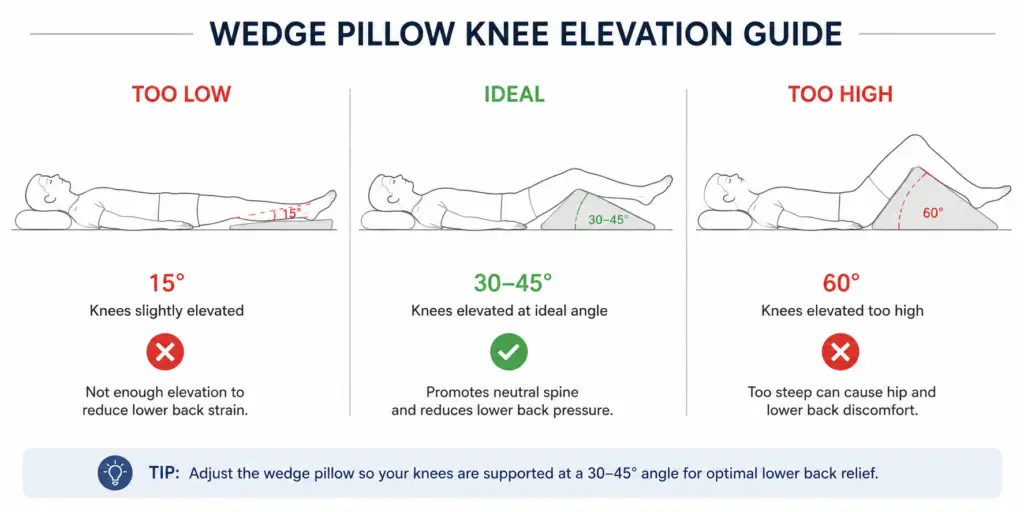
Not too steep. Not too flat.
This is the foundation of how to use a wedge pillow for lower back pain properly.
If the wedge is too high:
You may strain your hips.
If too low:
You won’t relieve enough lumbar tension.
✅ Method 2: Side Sleeping with Wedge
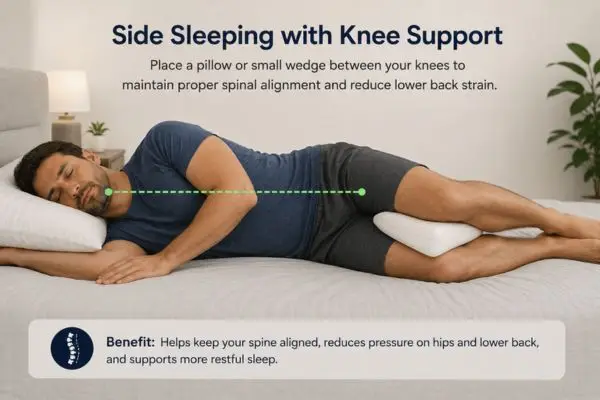
This is where most guides fail.
If you sleep on your side, you can still apply how to use a wedge pillow for lower back pain:
Place a smaller wedge or pillow between your knees.
This:
- Prevents hip rotation
- Keeps spine aligned
- Reduces twisting stress
For me, this made a noticeable difference on nights when I couldn’t stay on my back.
✅ Method 3: Sitting Support
Most lower back pain starts from sitting.
You can use a wedge behind your lower back while sitting upright.
When applying how to use a wedge pillow for lower back pain while sitting:
- Place the wedge vertically.
- Position at the lumbar curve
- Sit slightly forward, not slouched.
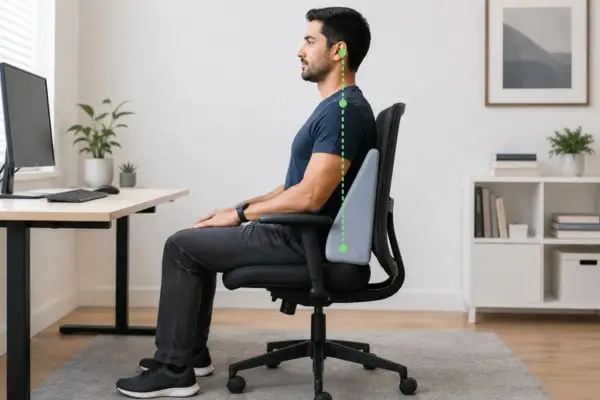
This supports natural curvature.
Mattress Firmness Changes Results
Soft mattress:
Shoulder and hips sink → wedge angle may need adjustment
Firm mattress:
Wedge works more predictably
If your mattress is sagging, no matter how well you understand how to use a wedge pillow for lower back pain, you may still struggle.
When a Wedge Pillow Might Not Help
This is important.
If your pain increases when bending forward (flexion-sensitive pain):
Wedge under the knees helps.
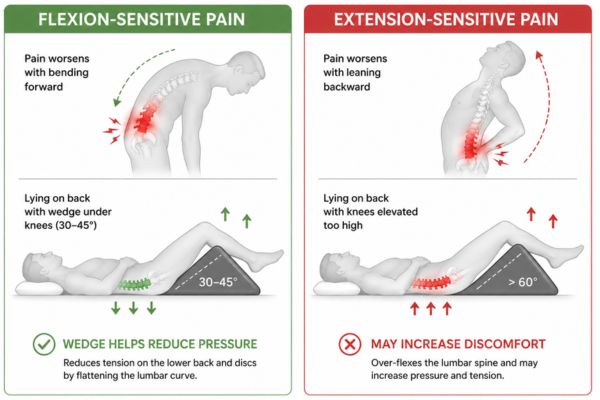
If your pain increases when bending backward (extension-sensitive pain):
Elevating knees may feel too flexed.
Knowing your pain pattern matters when deciding how to use a wedge pillow for lower back pain effectively.
My Adjustment Period
The first two nights felt strange.
My hips felt slightly tight.
My legs weren’t used to elevation.
By night four, I woke up noticeably less stiff.
That’s when I realized that learning how to use a wedge pillow for lower back pain requires a small adjustment time.
Angle Matters More Than Height
Most people think higher wedge = more relief.
Not true.
Too steep:
Hip flexors tighten
The lower back may feel compressed
Optimal:
Gentle knee bend, natural pelvic rotation
That subtle adjustment is key to mastering the use of a wedge pillow for lower back pain.
Daytime Recovery Trick
I also started using my wedge during:
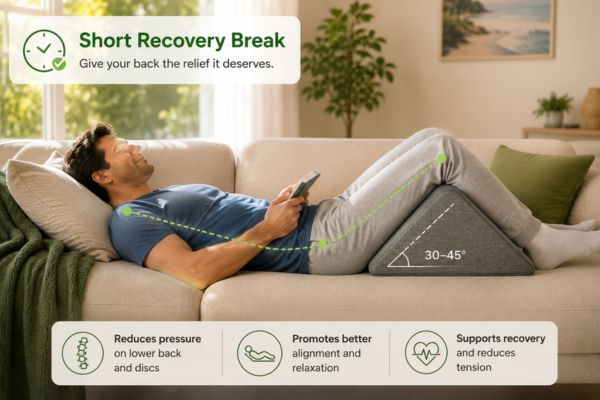
- Watching TV
- Reading in bed
- Short rest breaks
Short sessions during the day reduce nighttime strain.
Who Benefits Most?
Wedge pillows work especially well for:
✅ Lumbar disc irritation
✅ Sciatica
✅ Muscle tension from long sitting
✅ Postural lower back pain
✅ Mild degenerative disc discomfort
If you’re waking stiff but loosen up after moving, understanding how to use a wedge pillow for lower back pain may help significantly.
Signs It’s Working
You’ll notice:
- Reduced morning stiffness
- Less muscle guarding
- Easier mobility after waking
- Better sleep quality
If pain worsens or radiates down the legs, consult a medical professional.
When to Avoid Using It
Avoid or consult a doctor if:
- Severe spinal instability
- Recent surgery
- Severe hip joint pain
- Vascular circulation problems
Wedge pillows support recovery — they don’t replace medical care.
My Final Thoughts
For me, the breakthrough wasn’t buying the wedge.
It was learning exactly how to use a wedge pillow for lower back pain correctly.
The correct angle.
The right mattress pairing.
The adjustment period.
The posture correction.
It’s a simple tool — but only when used intentionally.
✅ FAQ Section
How high should a wedge pillow be for lower back pain?
Most people do best with 6–10 inches of elevation, creating about a 30–45-degree knee bend.
Can I use a wedge pillow every night?
Yes. Many people use it nightly, especially if they wake up stiff.
Does a wedge pillow fix sciatica?
It may reduce pressure on the sciatic nerve but is not a cure. It’s a supportive tool.
Can I use a wedge pillow while sitting?
Yes. Place it vertically behind your lower back for lumbar support.
How long does it take to feel relief?
Many people notice improvement within a few nights, though mild adjustment discomfort may occur initially.