When I first started comparing pillows seriously, I kept coming back to the same question:
Memory foam vs latex pillow — which one is actually better?
Both are labeled as supportive.
Both claim pressure relief.
Both promise neck alignment.
But after sleeping on both for months, I realized they feel completely different.
If you’re stuck choosing between memory foam and a latex pillow, this guide will help you decide based on real-world comfort — not just marketing claims.
Table of Contents
First, What’s the Core Difference?
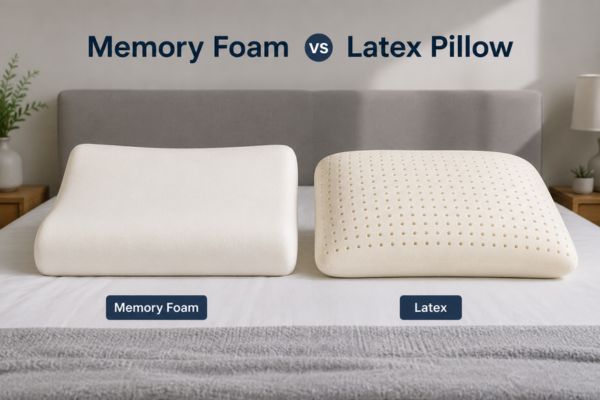
In simple terms:
- Memory foam pillow = slow, contouring, sink-in support
- Latex pillow = responsive, buoyant, lift-based support
That difference in feel changes everything in the memory foam vs latex pillow comparison.
My First Experience With Memory Foam
The first memory foam pillow I used felt incredibly comfortable at first.
It:
- Molded around my neck
- Reduced pressure points
- Felt stable and dense
But I also noticed:
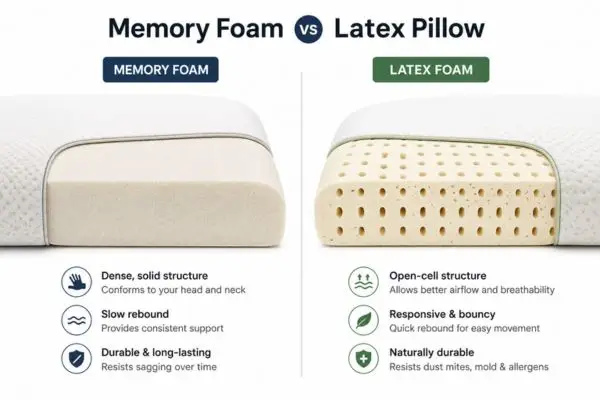
- It held warmth longer.
- It had a slight “sinking” sensation.
- It took a second to reshape when I moved.
In the memory foam vs latex pillow debate, memory foam feels more enveloping.
My First Experience With Latex
Latex felt completely different.
It:
- Felt springier
- Didn’t let my head sink much
- Bounced back instantly
- Stayed cooler
The biggest surprise?
Latex didn’t “hug” my neck the way memory foam did.
Instead, it lifted it.
That’s the key difference in memory foam vs latex pillow feel.
Support & Neck Alignment
This is where things get interesting.
✅ Memory Foam Pillow Support
- Excellent for pressure relief
- Great for side sleepers
- Ideal for people with shoulder pain
- Molds to curves deeply
But it can compress more over time.
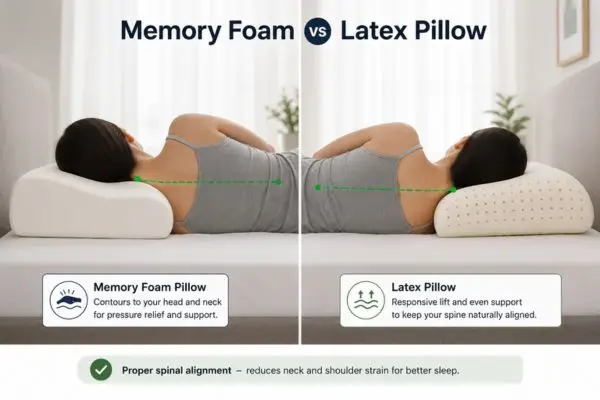
✅ Latex Pillow Support
- Consistent lift
- Holds shape longer
- More stable alignment
- Less sinking
If you prefer feeling “on” your pillow rather than “in” it, latex often wins in the memory foam vs latex pillow discussion.
Loft & Compression Over Time
One thing most guides ignore:
How these materials age.
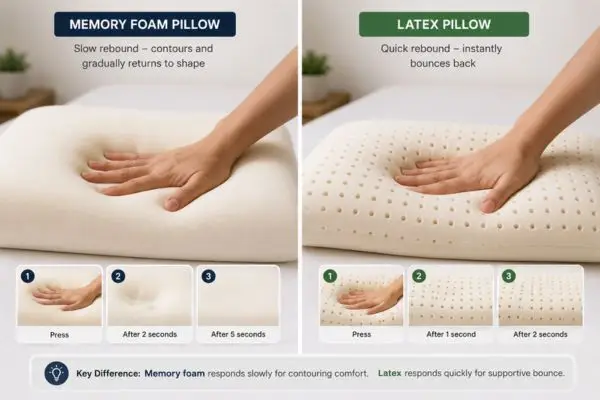
In the memory foam vs latex pillow comparison:
- Memory foam may develop indentations.
- Latex retains its structure longer.
- Memory foam typically lasts 2–3 years.
- Latex often lasts 3–4 years.
Latex wins in durability.
Cooling & Breathability
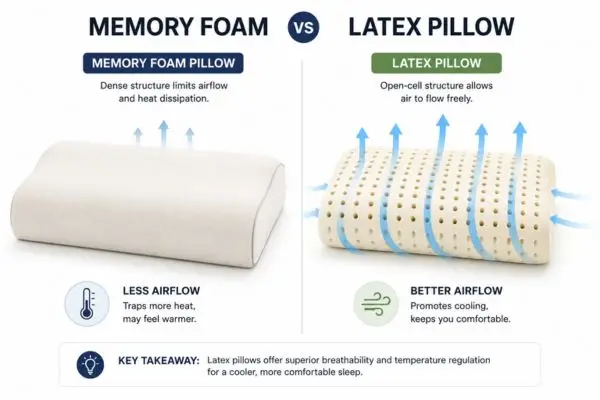
Memory foam tends to retain more heat — unless it’s ventilated or gel-infused.
Latex naturally contains air channels, so it stays cooler.
If you sleep hot, latex may be the better choice in the memory foam vs latex pillow comparison.
Side Sleepers: Which Is Better?
If you’re a side sleeper:
Memory foam:
- Better contour for shoulder gap
- More forgiving
- Excellent pressure relief
Latex:
- Stable support
- May need higher loft
- Less compression
In the memory foam vs. latex pillow decision for side sleepers, it depends on whether you prefer a contour or a lift.
Back Sleepers: Which Wins?
Back sleepers often benefit from:
- Moderate loft
- Stable neck curve support
Memory foam:
- Good contour
- May feel slightly enveloping
Latex:
- Better neutral alignment
- More responsive
In my experience, latex felt more consistent for back sleeping in the memory foam vs latex pillow comparison.
Mattress Firmness Interaction (Huge Factor)
Here’s something most people don’t consider.
Soft mattress:
- Shoulder sinks deeper
- Memory foam adapts easily.
- Latex may feel too high.
Firm mattress:
- Shoulder elevated
- Latex lift works well.
- Memory foam may compress more.
Mattress firmness changes the outcome in the memory foam vs latex pillow debate.
Budget Considerations
Memory foam pillows:
- Widely available
- Budget-friendly options
- $40–$80 range
Latex pillows:
- Often $90–$200
- Natural latex is more expensive.
If price matters, memory foam often wins the memory foam vs latex pillow affordability comparison.
Allergy Considerations
Memory foam:
- Generally hypoallergenic
Latex:
- Natural latex may trigger allergies in sensitive individuals.
This is a critical factor in the memory foam vs latex pillow decision.
My Honest Verdict After Testing Both
After months of switching back and forth:
- For pressure relief → Memory foam
- For durability & cooling → Latex
- For budget → Memory foam
- For long-term shape retention → Latex
Currently, I rotate depending on the season:
- Cooler months → Memory foam
- Warmer months → Latex
That’s my real-world answer to the memory foam vs latex pillow debate.
Who Should Choose Memory Foam?
Choose memory foam if you:
✅ Want deep contouring
✅ Have shoulder pain
✅ Sleep mostly on your side
✅ Are on a tighter budget
✅ Prefer a “hugging” feel
Who Should Choose Latex?
Choose LaTeX if you:
✅ Prefer bounce and lift
✅ Sleep hot
✅ Want a longer lifespan
✅ Move frequently at night
✅ Prefer firmer support
Final Thoughts
The memory foam vs latex pillow debate isn’t about which one is universally better.
It’s about:
- Your sleep position
- Your mattress firmness
- Your temperature preference
- Your budget
- Your support needs
There’s no single winner.
There’s only the right match.
✅ FAQ Section
Is memory foam or latex better for neck pain?
Both can work well. Memory foam offers pressure relief, while latex offers consistent lift. It depends on your preference.
Which lasts longer, memory foam or latex pillow?
Latex pillows generally last longer (3–4 years) compared to memory foam (2–3 years).
Is latex cooler than memory foam?
Yes, latex is typically more breathable and retains less heat.
Is memory foam cheaper than latex?
Usually yes. Memory foam pillows are more widely available in budget ranges.
Can I use either for side sleeping?
Yes. Side sleepers often prefer memory foam for contouring, but latex works well with proper loft.